Showing posts with label Wildlife.. Show all posts

Monday, July 2, 2012

Taiwan uses DNA mapping to save endangered sharks


Smiling Shark


TAIPEI (AFP) - Taiwan has begun testing DNA from shark fins sold in local markets in a bid to protect endangered species such as great whites and whale sharks, an official from the Fisheries Agency said on Wednesday. 

The efforts come as the island moves to restrict its shark fin industry, which environmental groups say accounts for the deaths of 73 million sharks each year across the world. 

Taiwanese fishermen are already barred while their vessels are at sea from removing shark fins, which are considered a delicacy in Chinese cuisine and often served in soup at special occasions such as weddings. 

Fisheries Agency spokesman Kevin Chung said the department had analysed samples of 100 fin products so far and checked them against DNA databanks of up to three-quarters of the world's approximately 400 shark species. 

Source: http://www.straitstimes.com/BreakingNews/Asia/Story/STIStory_802134.html

Picture Source: http://ffden-2.phys.uaf.edu/104_2012_web_projects/Jenna_Schmidt/Sharks.html

Malaysia Saves Endangered Pygmy Elephant on Borneo

Pygmy-elephant-calf-625x450 


Kuala Lumpur, Jan 23, 2012 (AFP) - Malaysian wildlife authorities said Monday they had rescued a pygmy elephant calf on Borneo island and expressed hope a planned sanctuary would provide protection for the endangered animals.
  
The male calf, which is less than a month old, was pulled out of a deep moat surrounding a palm oil plantation in remote Sabah state on Friday, said Sen Nathan, a senior official with the Sabah Wildlife Department.
  
It is the fifth calf rescued by wildlife officials since 2009. Three of those previously saved have died but a female has recovered and is now at a wildlife park.

[Quiz Yourself: How Much Do You Know About Pygmy Elephants?]
 
There are fewer than 2,000 Borneo pygmy elephants left in the wild, according to authorities. A sub-species of the Asian elephant, the creatures have a rounded appearance and are smaller than mainland elephants.
  
The latest rescued calf, which weighed about 50 kilograms (110 pounds), was in a serious condition, Nathan told AFP.
  
"He suffered severe dehydration and cuts and abrasions, probably while trying to get out of the moat," he said.
  
The elephant's mother was probably forced to leave it behind after the pair fell into the moat, and the calf likely spent more than a day there before being spotted by plantation workers, he said.
  
Nathan said a planned elephant sanctuary on 1,200 hectares (3,000 acres) of land within the 26,000-hectare Kinabatangan wildlife sanctuary in Sabah would help protect the animals.
  
The sanctuary would be able to house up to 60 injured elephants, as well as those found when they were too young to be reintroduced into the wild.

[Learn More About Pygmy Elephants]
  
Authorities announced plans for the sanctuary earlier this month and want it open by the end of the year. "We really need this sanctuary," Nathan said.
  
The sanctuary will be funded with 5.3 million ringgit ($1.7 million) from industry body the Malaysian Palm Oil Council and 1.5 million ringgit from NGO the Borneo Conservation Trust.
  
Wildlife activists warn that pygmy elephants are fast losing their natural habitat to deforestation and human encroachment on Borneo, a vast island shared by Malaysia, Indonesia and Brunei.

Source: http://blogs.discovery.com/animal_news/2012/01/malaysia-saves-endangered-pygmy-elephant-on-borneo.html

Thursday, June 7, 2012

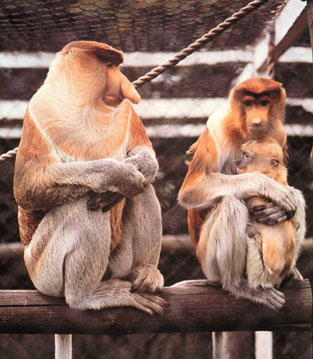
Labuk Bay Proboscis Monkey Sanctuary


The Best Place to See Endangered Proboscis Monkeys in Sabah, Borneo

The Labuk Bay Proboscis Monkey Sanctuary in Sabah, Borneo is 400 acres of privately-owned land which has been set aside as a refuge for endangered proboscis monkeys. Around 60 monkeys call the Labuk Bay Proboscis Monkey Sanctuary home. The mangrove forest, originally targeted to be developed commercially, was set aside in 1994 and then opened to the public later. With most of their native habitat in Sabah consumed by palm oil plantations, the proboscis monkeys would have little chance to survive without the refuge.
While seeing endangered orangutans is a highlight for many visitors to Borneo, even fewer proboscis monkeys remain in the wild.

A Little About Proboscis Monkeys

One of the strangest and most endangered primates in the world, people never forget seeing proboscis monkeys for the first time. Native only to Borneo, the pot-bellied, floppy-nosed proboscis monkey has been red-listed on the IUCN List of Threatened Species. Sadly, less than 7,000 proboscis monkeys are thought to be left in the wild. Only 2,000 monkeys still survive in Sabah, mostly due to habitat loss.
Proboscis monkeys are highly reclusive; spotting one in the wild is challenging. The Labuk Bay Proboscis Monkey Sanctuary gives visitors a chance to see protected proboscis monkeys in a semi-wild environment. The Bako National Park in Sarawak and boat cruises from Sukau are probably the only other places for the average visitor to see proboscis monkeys in Borneo.

Tips for Visiting the Labuk Bay Proboscis Monkey Sanctuary

  • The entrance fee is $20 for adults; $10 for children under 12 years old.
  • The sanctuary is home to a wide variety of birds and other wildlife - pack or borrow binoculars.
  • The platform viewing area is covered; weather is rarely an issue.
  • Plan on at least five hours for transportation and time to enjoy the sanctuary.
  • Labuk Bay Proboscis Monkey Sanctuary has overnight accommodation for guests wishing to extend their visit.

Feeding Times

Each of the two platforms at Labuk Bay Proboscis Monkey Sanctuary has two daily feeding times. Plan to arrive a little early in the busy season in order to get good photographs. During feeing times, fruit is placed on wooden platforms to bring the proboscis monkeys into one place where they can be viewed easier. The monkeys know approximately when feeding time will start and begin to congregate in the trees around the platforms.
  • Platform A: 9:30 a.m. and 2:30 p.m.
  • Platform B: 11:30 a.m. and 4:30 p.m.

Other Things to Do at Labuk Bay Proboscis Monkey Sanctuary

While the proboscis monkeys are certainly the main draw to Labuk Bay Proboscis Monkey Sanctuary, there are actually many other activities available to visitors.
  • Bird Watching: The sanctuary boasts a diverse array of birds commonly seen on the property; guests are invited to lounge in an observation tower to watch for rare species such as the Oriental Pied Hornbill, Collared Kingfisher, and Purple Heron.
  • Night Walks: The rainforest comes alive with sounds and shiny eyes once the sun goes down. People who are staying overnight may take advantage of the night walk trails to spot nocturnal wildlife.
  • Morning Walks: Most animals are active early in the morning before the afternoon sun heats up the forest. Guests can begin walking the trails at 7 a.m. in search for deer and other wildlife that call the rainforest home.
  • River Cruises: Similar to the boat cruises offered from Sukau along the Kinabatangan River, expert guides take guests up the river in search of wildlife along the banks. Wild boars, hornbills, and even the occasional python make appearances.

Accommodation

Labuk Bay Proboscis Monkey Sanctuary has eight semi-detached chalets available for people wishing to stay overnight. Guests can take advantage of the night walk, morning trek, and other activities typically difficult to enjoy on only a day trip. Contact Labuk Bay Proboscis Monkey Sanctuary for reservations and prices.

Getting to Labuk Bay Proboscis Monkey Sanctuary

The Labuk Bay Proboscis Monkey Sanctuary is located just outside of Sandakan in East Sabah. A myriad of tour operators in Sandakan typically combine trips to the proboscis sanctuary with a visit to the Sepilok Orangutan Rehabilitation Centre or the Rainforest Discovery Centre.


You can make your own way to Labuk Bay Proboscis Monkey Sanctuary by teaming up with other travelers to hire a taxi or private car. Begin by driving on Jalan Labuk toward Kota Kinabalu, then turn at the mile 19 junction - signs indicate the direction. The sanctuary is another nine miles down the gravel road. Alternatively, the sanctuary offers transportation from Sandakan town; make reservations in advance by contacting them via phone. Minibuses depart Sandakan at 9 a.m. and 2:30 p.m.

The monkey sanctuary is only
24 miles from the airport in Sandakan, but the drive takes nearly an hour due to unfinished roads.

Contacting the Labuk Bay Proboscis Monkey Sanctuary


Monday, June 4, 2012

Endangered otter rediscovered in Borneo

The last time the hairy-nosed otter (Lutra sumatrana) was seen in Borneo it was road-kill, but researchers have now photographed a living individual of this elusive and endangered species. Photos were taken by camera trap in the Dermakot forest in Sabah, a state of Malaysian Borneo. While the last specimen known in Borneo was killed by a car in 1997, the species hasn't been found confirmed in Sabah for over a century.

"This is great news for Sabah and shows once again how unique and fortunate we are in terms of wildlife and nature. In addition, these findings also boost the conservation of this endangered otter internationally as historically this otter was distributed throughout large parts of southeast Asia," said Sabah Wildlife Department (SWD) Director, Dr. Laurentius Ambu, in a press release.

The photos were taken as apart of the Conservation of Carnivores in Sabah (ConCaSa) program, which began in 2008 to study the state's carnivores, including wild cats, civets, and otters. The project is being carried out by the Leibniz Institute for Zoo and Wildlife Research (IZW) with help from the SWD and the Sabah Forestry Department (SFD).

The identity of the hairy-nosed otter was verified by a number of exports given how similarly different otters can appear. The hairy-nosed otter is listed as Endangered by the IUCN Red List and is considered one of the world's most threatened otters. Individuals have been found in a number of other Southeast Asian countries, including Thailand, Vietnam, and Cambodia, yet the otter is most threatened by poaching for meat and traditional medicine uses. It has also been hit by pollution, habitat destruction, and loss of prey due to overfishing. According to the IUCN the otter population has been cut in half in the past thirty years.

The Deramakot forest is an FSC-certified forest managed by the SFD with an eye towards sustainable logging.

"These findings show that long-term sustainable forest management is of great importance for the protection of some of this country’s most threatened species and of the unique biodiversity of the forests of Borneo," said Datuk Sam Mannan, Director of the SFD.


The hairy-nosed otter (Lutra sumatrana). Researcher Azlan Mohamed setting up one of the automated camera traps in the Deramakot Forest Reserve. Photo courtesy of ConCaSa.
Camera traps in Deramakot forest have also revealed all of Borneo's five cat species, (Sunda clouded leopard, bay cat, marbled cat, leopard cat, and flat-headed cat) and 13 other carnivores, including the sun bear. The study also produced the first video footage of the otter civet (Cynogale bennettii).

"These results mean that out of 25 known carnivore species in Borneo, our project, together with a Japanese researcher Hiromitsu Samejima, confirmed 20 in Deramakot. This makes Deramakot outstanding for being extremely rich in its diversity of carnivores," said Andreas Wilting, project leader of the IZW.


The "rediscovered" hairy-nosed otter (Lutra sumatrana). Photo by: Mohamed & Wilting, SWD, SFD.


A photograph of the banded civet (Hemigalus derbyanus), note another automated camera trap on the opposite side. Photo by: Mohamed & Wilting, SWD, SFD.


A photograph of the otter civet (Cynogale bennettii). Photo by: Mohamed & Wilting, SWD, SFD.


Palm oil threatens Borneo's rarest cats

Oil palm expansion is threatening Borneo's rarest wild cats, reports a new study based on three years of fieldwork and more than 17,000 camera trap nights. Studying cats in five locations—each with different environments—in Sabah, Malaysian Borneo, researchers found that four of five cat species are threatened by habitat loss due to palm oil plantations.

"No other place has a higher percentage of threatened wild cats!" Jim Sanderson, an expert on the world's small cats, told Mongabay.com. Pointing out that 80 percent of Borneo's cats face extinction, Sanderson said that "not one of these wild cats poses a direct threat to humans."

The groundbreaking study, undertaken by Jo Ross and Andrew Hearn with the UK's Global Canopy Program's Bornean Wild Cat and Clouded Leopard Project, has uncovered some of the first data on Borneo's wild cats. The five cats species in Borneo include the Sunda clouded leopard, the bay cat, the marbled cat, the leopard cat, and the flat-headed cat (camera trap photos below).


A flat-headed cat in captivity. Very little is known about this species, though it is heavily adapted to catching freshwater species and likely spends a lot of time hunting in water. Photo by: Jim Sanderson.
"Sabah’s five species of wild cat are a special conservation treasure, and this study has made a tremendous contribution to knowledge about them," Director of the WildCRU Professor David Macdonald said. Having worked with wild cats around the world, MacDonald is chairing a workshop in Sabah with various stakeholders to discuss conservation measures to protect the island's embattled cats.

Ross and Hearn discovered that Borneo's cats were present in both primary forests and recently logged over forest, yet only one of the five cat species—the leopard cat—utilizes palm oil plantations. For the other four species, palm oil plantations appear to be off-limits, even for migration purposes. In addition, Ross and Hearn found no evidence of the flat-headed cat utilizing or migrating in palm oil plantations, despite claims that the cats survive there. The researchers say that their findings should give special emphasis to keeping remaining forests—even those recently logged—free from further palm oil expansion.

The researchers also succeeded in estimating population densities for the Sunda clouded leopard using camera traps, as well as radio collaring and tracking an individual clouded leopard. The Sunda clouded leopard, which is endemic to Borneo and Sumatra, has only recently been declared a distinct species from the mainland clouded leopard.

Ross and Hearn have also taken the first photographs of the elusive bay cat in Sabah, and have recorded the world's only video of the cat.

Three of Borneo's five cats are classified as Endangered by the IUCN: the Sunda clouded leopard, the bay cat, and the flat-headed cat.

"Wild cat (and wildlife) endangerment is due to a wide variety of threats including: unmitigated massive habitat loss caused by palm oil plantations, unregulated destructive logging practices including widespread small-scale illegal logging, unchecked poaching even in conservation areas and wildlife reserves, destruction of fresh water rivers and streams from logging, dumping of debris from oil palm plantations, bottom dredging for gold, and pollution caused by the use of streams as sewers, and the widespread use of nets for fishing," Sanderson explains.

Except for the leopard cat, Borneo's cats all occur in low densities. The study found that to have a viable population of 250 Sunda clouded leopards requires an area of 3,000-8,600 square kilometers (1,158-3,088 square miles). There are very places in Sabah with this much forest left.

"These wild cats, and especially the Sunda clouded leopard are important emblems of Borneo’s forests, and it is vital to conserve them as umbrella species which provide protection to forest wildlife in general," Macdonald said.

The marbled cat is classified as Vulnerable by the IUCN Red List. The leopard cat is the only one not considered threatened and is classified as Least Concern.

The workshop entitled "First Steps Towards Conserving Bornean Wild Cats" is hosted by the Sabah Wildlife Department in collaboration with Universiti Malaysia Sabah and Global Canopy Program's Bornean Wild Cat and Clouded Leopard Project. The project is largely funded by the UK government's Darwin Initiative.
 
Sunda clouded leopard caught in a camera trap. In Borneo the Sunda clouded leopard is the largest cat species, but in Sumatra it competes with the Sumatran tiger. Copyright: Global Canopy Programme. Photo by: Jo Ross and Andrew Hearn.  
The leopard cat in Borneo is considered a unique subspecies. Copyright: Global Canopy Programme. Photo by: Jo Ross and Andrew Hearn.  
Researchers suspect there are less than 2,500 mature bay cats left in the wild. The species is endemic to Borneo and rampant deforestation is the main threat. Copyright: Global Canopy Programme. Photo by: Jo Ross and Andrew Hearn.  
The marbled cat: this species has never been fully studied. Very little is known of its ecology. Copyright: Global Canopy Programme. Photo by: Jo Ross and Andrew Hearn.

Read more: http://news.mongabay.com/2009/1104-hance_borneo_cats.html#ixzz1vZow7rkB

Malaysia introducing tough new wildlife laws

By the end of the year, Malaysia will begin enforcing its new Wildlife Conservation Act 2010 including stiffer penalties for poaching and other wildlife-related crimes, such as first time punishments for wildlife cruelty and zoos that operate without license.

Dr. William Schaedla, the director of the wildlife-trade monitoring group TRAFFIC Southeast Asia, told mongabay.com that "the new law represents the first major revamp of the national wildlife law in over 30 years." The bill will replace the Wildlife Protection Act of 1972.

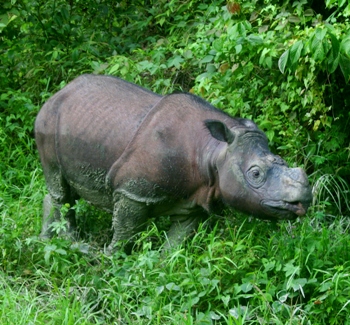
To better combat ongoing poaching problems in the Southeast Asian country, penalties have been boosted: killing a Sumatran rhino, a Malay tiger, a clouded leopard, or any protected wildlife will now bring a maximum fine of RM 100,000 (31,000 US dollars) and five years in jail or both if they are female or young. The maximum fine drops to RM 50,000 (15,500 US dollars) for male animals. In addition, for the first time setting snares, hunting, or keeping certain species captive—such as rhinos and tigers—comes with mandatory jail time.


A Bornean rhino, a subspecies of the Sumatran rhino, in captivity in Borneo. Researchers believe there are only some 250 Sumatran rhinos left. Photo by: Jeremy Hance.
"There are areas where the law could be much better organized and tightened, but as it stands, this bill is a vast improvement on the existing law," says Schaedla. "This is because it shows greater recognition of current threats facing wildlife and addresses problems that have plagued enforcement agencies trying to protect wildlife."

For example, the bill also expands protection to more species, including the Asian elephant. Before this new bill, the elephant was considered by Malaysian law as a 'game animal'.

According to the IUCN Red List the Sumatran rhino is Critically Endangered, while the Malay tiger and the Asian elephant are listed as Endangered. These three species are most threatened by poaching, although habitat loss has played a large role in both their historic and ongoing declines. The two clouded leopard species, only recently split into two by taxonomists, are both considered Vulnerable. Although less a poaching target than the other species, clouded leopards are still killed for their coats.

Schaedla says that the success of the new bill in protecting these species will largely depend on implementation. Many countries have stiff penalties for poaching and strong wildlife laws, but fail to catch poachers or punish them with much more than a slap on the wrist.

"How well the new penalties work will depend entirely on how successful enforcement agencies are in bringing poachers and other wrongdoers to justice," Schaedla explains. "The judiciary system must treat wildlife offences as a criminal offence. Offenders must be held liable and be prosecuted to the full extent of the law. For endangered species to be protected, it must be made clear that poaching does not pay."

Schaedla also says that more needs to be done to infiltrate poaching networks: "[Malaysia] should invest more in intelligence led investigations for more effective enforcement. […] More checks at known hotspots throughout the country, at sites that are known to be used as entry-exit points for smuggling wildlife, is needed. To do this, all enforcement agencies—police, customs, army—must work together."

Given that it has taken over thirty years for a new wildlife bill, Shaedla adds that the government should look more frequently at its wildlife trade laws to deal with new situations as they arise.

TRAFFIC is a conservation organization devoted to monitoring the global wildlife trade, encouraging sustainability, and ending illegal trade in species or species' parts.

Sunday, June 3, 2012

Birdwatching in Sabah

From the latest record 664 resident and migratory species of birds have been spotted in Sabah, with 51 of these species which are endemic to this region. As many as 24 Bornean endemic species are found only in the hill slopes or mountain forests, like the Kinabalu Park and the Crocker Range National Park. With these records of bird species found here, no wonder Sabah is fast becoming the number one bird watching destination in South-east Asia.


What are the most sought after endemic birds? Well, here are some of the names of these special birds, Bornean Bristlehead, Bornean Ground Cuckoo, Golden-naped Barbet, Whitehead's Boardbill, and Whitehead's Trogon. One would not want to dismiss, the eight species of Hornbill that roam the forests of the the Kinabatangan river. Parks, reserves, islands and bird discovery centres are all easily accessible, thanks to Sabah good transportation network and the many comfortable accommodations at these places.
Sabah remains warm throughout the year, with temperatures ranging from 23°C to 32°C. The weather is influenced by the wet northeast monsoon from November to March. During this time, birds from the northern hemisphere escape the cold weather by migrating to Borneo via the Philippine island chains. Majority of these migrants are waterbirds, and to a lesser extend some raptors.
Most of the resident birds breed during the end of the monsoon. From May to October, many forest trees are bearing fruits, which in turn attract many fruit-eating birds. This is also the time when these fruit eating birds breed. Paddy birds and open country birds mostly breed during the driest month, which is April in Sabah.
Below are some of the Bird Watching Destinations which are grouped under Sabah's divisions:

West Coast Division:
Kinabalu Park
Kinabalu Park is Malaysia's first UNESCO World Heritage Site. This park has a proctected area of 75,370 hectares, which encompass five different climate zones. The lowland rainforest is found in the Poring Hot Spring area (about 550 meters above sea level), and the lower mountain forest is located at the Kinabalu Park Headquarters area (about 1,500 metres). On the eastern side of the park and around the Mesilau Nature Resort (2,000 metres), these areas are covered by mountain forest. Travelling higher up Mt. Kinabalu, the mountain forest will slowly give way to the sub-alpine forest, and eventually one will reach the barren granite summit plateau. Although most of the bird communities reside on the lowland rainforests of Borneo, Kinabalu Park has a surprising number of bird species. 58 mountain birds are recorded and 17 species of them are endemic Bornean species.

The Botanic Garden is the best place to watch birds at the park. Watch out for brids such as the large Bornean Treepie, Ashy Drongo, Laughing Thrush, Short-tailed Magpies, and Temminck's Sunbird. Other birds seen here are the various babblers and flycatchers. At the Balsam Cafe and Rock Hostel, Flowerpeckers and Sunbirds can often be spotted from the verandah. Tracking on the forest trails in the early morning or late afternoon is going to yeild some good sighting of Bar-winged Cuckoo-shrike, Sunda Whistling Thrush, Velvet-fronted Nuthatch, and the iridescent green Whitehead's Broadbill. Endemic species like the Whitehead's Trogon, and Whitehead Spiderhunter can be seen occasionally. There are some seven trails around the park and the best of them for bird watching are the Bukit Ular, Silau-Silau and Kiau View trails.
Mount Kinabalu
Kinabalu Park Headquarters


Poring Hot Spring
Poring attracts many visitors largely due to its popular hot spring. Believe for its medical value, visitors love to enjoy a hot bath or just soak their feet on the high sulphuric contain mineral water. Although it is still located within the boundary of Kinabalu National Park, the forests here are mostly of lowland rainforest. Best place to watch birds do take a walk along the Langanan Waterfall.

Exploring the trail towards the Langanan Waterfall, is going to reward birders with species like Banded Broadbill, Bornean Striped Tit-babbler, Diard's Trogon, Gold-whiskered Barbet, Pygmy White-eye and the Blue Banded Pitta. While in the early morning and late afternoon when most of the visitors have gone, Woodpecker, Barbet, and Sunbird can be seen at times. Two endemic species, the White-crowned Shama, and the Dusky Munia are among the birds which can be spotted feeding on nectar of the flowering plants at Poring.
Poring Hot Spring

Kota Kinabalu Area:
Kota Kinabalu Wetland Centre (5*59'37 N, 116*04' E)
Lies on the foothill of Kota Kinabalu most significant is the Signal hill. The Kota Kinabalu Wetland Centre (KKWC) is easily accessible from the city centre just three kilometers away. Taking a taxi here is the best mode of transport. The KKWC is a big wetland area, with the mangrove swamp as its most prominent landscape. More than 80 species of birds have been recorded at the KKWC.

Egrets are one of the most common birds found in KK. It is not uncommon to see them scavenging for food at the drainage in and around the city. Six types of egrets reside within the area, including the Great Egret and the Pacific Reef Egret.
Canopy birds like doves, kingfishers, pigeons, and starlings are spotted here by visitors. From October to April, migratory birds such as Common Sandpiper, Greenshank, Redshank, Night Herons and Plover will reside at the KKWC area.
Kota Kinabalu Wetland Centre
Likas Bay
One of the most accessible places to watch birds at Kota Kianbalu is at the Likas Bay. Just 10 minutes by car to the north of Kota Kinabalu, the Likas Bay Park, about 1 kilometre long, is frequently visited by Egrets and Waders especially so during the northern hemisphere winter. Likas swamp is separated by a busy main road from the South China Sea. Look for the Ducks, Gallinules and Moorhens at the fresh-water lagoon.

Mantanani Island
Located on the northwest of Kota Kinabalu, Mantanani Island can be reached by boat about 45 minutes from Kuala Abai Jetty, near Kota Belud. Mantanani Islands, made up of three islands, is a great place for snorkelling and scuba diving, water clarity is among the best in West Coast Sabah. For the Bird watchers the main attraction is of course the endemic Mantanani Scops Owl, found only on this island. The small rocky islet, Lingisan, and Mantanani Kecil, both of these islands are protected bird sanctuaries. These two little islands are home to the Lesser Frigatebird and the Christmas Island Frigatebird, which fly to the Christmas Island at the Indian Ocean for breeding each year. At dusk, it is common to see thousands of Frigatebirds flying into the tree tops of the Lingisan island for the night.

Mantanani Island
Mari Mari Backpackers Lodge


Sandakan Division:
Kinabatangan River
Kinabatangan river, with a length of 560km, is the longest river in Sabah. It stretches from the interior of Sabah all the way to its river mouth which opens out to the Celebes sea. Kinabatagan floodplain, the largest in Malaysia, is a refuge to the many wildlife in Sabah. WWF, a conservation organisation, reckons that this is one of the two places on earth where one can watch 10 primate species at a single place. Some of these animals like Proboscis monkey and the Borneo Pygmy Elephants are endemic to the Borneo Island. Lonely planet guide book even mentions that Kinabatangan area is Malaysia’s gift to the world for its wildlife and nature. Many cabins, lodges and resorts are operating along the Kinabatangan River, expecially near Sukau and Bilit. With the good facilities provided by these accommodations watching birds in the forest is just like staying at home.

The most special birds here are the rare Storm's Stock and the endangered Oriental Darter. Other striking birds seen along the river especially in the morning are the Rhinoceros Hornbill, Helmeted Hornbill, and the Wrinkled Hornbill. Raptors often seen near the oil plam plantations are Crested Serpent Eagle, Lesser Fish Eagle, Buffy Fish Owl, Brahminy Kite and the little White-fronted Falconet. Other birds spotted here are the Great Egret, Kingfishers, and Broadbills. Endemic bird species like Bornean Bristlehead and Bornean Ground Cuckoo are some time seen here.
Kinabatangan Safari
Nature Lodge Kinabatangan


Rainforest Discovery Centre
This is a great new addition to the Sandakan tourist destinations. Set within the Kabili-Sepilok Forest Reserve, Rainforest Discovery Centre is a huge place. The main attractions here are the canopy walk, the plant discovery garden and the forest trails. Bird lovers will have an extra incentive to visit three towers that mushroom up to the top of the canopy, giving visitors a spectacular view over the surrounding tree tops. Huge canopy walkway on equal height with the tree tops allows photographers to choose the perfect spot to capture that unique picture of exotic birds of Borneo.

Rainforest Discovery Centre is the best place to watch out for the endemic Bornean Bristlehead, which is high on every bridwatcher's list. Other strikingly colourful birds seen here are the Banded Kingfisher, Rufous-collared kingfisher, Black & Crimson Pitta, Banded Broadbill and the Diard's Trogon. At RDC there is a good chance to see all the eight species of hornbills found in Sabah. For more detail-description on birds seen in RDC, follow the link below.
Rainforest Discovery Centre

Gomantong Caves
The Gomantong Caves system contains around nine caves and it is the best known limsestones outcrop in the Lower Kinabatangan area. The more accessible cave is the Simud Hitam with its roof soaring up to 90 metres high, and with a well-maintained boardwalk for exploring the cave ecology. Simud Puteh, home to million of swiftlets and bats, is where the valuable bird nests are found. Four types of swiftlets, namely Black-nest, Edible-nest, Mossy-nest, and Glossy, are found residing at these caves. At dusk, millions of bats emerge from the caves, raptors like Bat Hawks and Peregrine Falcons, a dark local species, are usually seen catching bats for meals.


Tawau Division:
Tabin Wildlife Reserve
Located on the south eastern part of Sabah, Tabin Wildlife Reserve is an important birding area. The reserve covers an area of 120,500 hectares of mostly lowland dipterocarp rainforest. It is also the largest wildlife reserve in Malaysia. The forest of Tabin attracts extraordinary diversity of birds, including many rare and endemic species, largely due to its rich abundance food source, the fruit plants. The forests here with its low canopy allow sufficient sun light to penetrate, making bird watching and photography a delightful experience. About 42 indigenous families representing more than 260 species of birds have been recorded here, including the eight species of Sabah's Hornbill.

Apart from birds, Tabin is also home to the rare and very endangered Bornean Rhinoceros, Borneo Pygmy Elephant, Tembadau (wild ox) and Orang-Utan. A special geological feature at Tabin is the intriguing mud volcanoes that provides mineral salts for the wild animals. Good places to watch birds at Tabin Wildlife Reserve are the Lipad mud volcano, the road to the core area, and around the resort.
Rarely seen species at this reserve are the Jambu Fruit Dove, Large Green Pigeon, White-fronted Falconet, Great-billed Heron, Giant Pitta, and the Strom's Stock. The more common birds here include the Black & Crimson Pitta, Blue-headed Pitta, Everett's White-eye, Malaysian Blue Flycatcher, Temminck's Sunbird and the Yellow-rumped Flowerpecker. Other bird families found here are the boardbill, eagle, falconet, kingfisher, munia, parrot and woodpecker. The eight species of Hornbill in Sabah are Black Hornbill, Bushy-Crested Hornbill, Helmeted Hornbill, Pied Hornbill, Rhinoceros Hornbill, Wreathed Hornbill, White-crowned Hornbill and Wrinkled Hornbill.

Danum Valley Conservation Area
Danum Valley Conservation Area with a land mass of 483 square kilometres is the largest undisturbed virgin rainforest in Malaysia. Located near the upper reaches of Sabah's second longest river, the Segama, Danum Valley is recongnized as one of the most complex ecosystem in the world. Some of the rare and endangered species in Danum Valley include the Bornean Rhinoceros, Borneo Pygmy Elephant, Clouded Leopard and the beloved Orangutan.

The Great Argus Pheasant, which is high on the list of endangered species of Sabah's wildlife Department, is seen at the Danum Valley from time to time. The striking Crested Fireback Pheasant is often sighted near the Borneo Rainforest Lodge. The endemic Bornean Bristlehead and the Chestnut-necklaced Partridge are also seen at Danum. Other atrractions here include the Black-throated Babbler, Bornean Babbler, Bornean Flycatcher, Diard's and Scarlet-rumped Trogons. The hornbill and pitta families are also spotted here, and at night watch out for the Buffy Fish Owl, and Brown Wood-Owl.

Interior Division:
Crocker Range National Park
The Crocker Range is the main mountain range in Sabah that divides the west coastal plain and the rest of the state. Crocker Range National Park was gazzetted in 1984, and it is the largest park in Sabah, covering an area of about 140,000 hectares of densely forested terrain. The park area starts from Tambunan and expands all the way to Keningau region, including many steep mountains. This region is also home to the largest flower in the world the Rafflesia. Two main points for bird watching are the Rafflesia Forest Reserve and the Head-station at the Keningau Crocker Range.

Endemic species like the Bornean Barbet, Mountain Barbet, Cinnamon-rumped Trogon, Whitehead's Broadbill and the Whitehead's Spiderhunter are often spotted at or near the Rafflesia Forest Reserve. Other birds sighted here are the Sunda Laughing Thrush and the Chestnut-hooded Laughing Thrush. The Rafflesia Forest Reserve has an altitude of about 1,650 metres. At the Keningau Head-station, the Great Argus Pheasant, the endemic Golden-naped Barbet, and several species of hornbill can also be seen here. The world's smallest raptors, the White-fronted Falconets only found in the far northwest of Borneo, are often seen sitting in pine tree, waiting to make a kill.
Utan Paradise Jungle Lodge

Pulau Tiga Park
Located 48km south of Kota Kinabalu, Pulau Tiga Park is made up of three islands, including the popular snake island. Upgraded to a National Park in 1978, Pulau Tiga was made famous by the popular series called Survivor. One of the unique features of the island is its volcano mud which can be found in the centre of the island. Birds recorded here are the Dollarbirds, Frigatebirds, Hornbills, Magpie Robbins and the White-bellied Sea Eagle. The Tabon Scrubfowl is a domestic hen which lays its eggs on the sand, then covered them with a mound of rotting vegetable and sand, and finally leaving them to incubate under the sun.


Source: http://www.beautifulkk.com/highlights/birdwatching-in-sabah

Top Five Endangered Animals in Malaysia

The population of these animals have been decreasing over the years and some are said to have become extinct.

I’m from Malaysia, a rainforest country where all types of animals are able to live together peacefully – or that was what used to happen many years ago. Now, some of these animals are under serious threat and are facing the possibility of becoming extinct.

Black Shrew
Black Shrew has rarely been seen by human and there is no official record on its size. However, witnesses have estimated the size to be 20 – 100 mm. One recorded specimen was found in Mount Kinabalu in Sabah, Malaysia. Nobody knows whether this creature has extinct or still occupy a small area in the Sabah state of Malaysia. They tend to be aggressive towards each others and are mostly solitary creatures.


Estimated number left in the world = Critically endangered. Might already been extinct.
Sumatran Rhinoceros
Sumatran Rhino is the smallest rhinoceros measuring about 250 centimeters in length and 120-145 centimeters tall (shoulder). It is also much lighter than other rhinos, weighing about 500-800 kilograms. The 2-horned rhino can normally be found in swamps and rainforests of Asia countries such as Malaysia, Thailand, Indonesia and India. However, these solitary animals are facing the threat of extinction due to the poaching of their horns.


Estimated number left in the world = 300
Malayan Tapir
Tapir is a pig-like animal with a short snout. They inhabit the forest regions of South America, Central America and South East Asia. Their closest relatives are the horses and rhinoceroses, and all 4 species have been classified as endangered. In Malaysia, only 1 of the 4 species of tapir exists – the Malayan Tapir. Tapir mainly survive on the forest’s resources such as berries, leaves and fruits. They have not many natural predators in the forest thanks to their thick skin and ability to run fast. As for Malayan Tapir, its strange body colour is often misunderstood as a large rock when lying down. This serves as a good camourflage for the creature. However, their numbers are fast declining due to their habitat loss (establishment of plantations, forest burning and logging), and the hunt for their meat and hide.


Estimated number left in Malaysia (Malayan Tapir) = about 369
Mouse Deer
Mouse Deer or better known as Sang Kancil in one of Malaysia’s folklores, is a small creature about 70 centimeters long, 30-35 centimeters tall (shoulder), and around 5-8 kilograms in weight. That’s the estimated size of the Greater Mouse Deer while the Lesser Mouse Deer species is estimated to weight around 2 kilograms. Mouse deers can only be found in Malaysia, Borneo and parts of Indonesia. They survive mostly on fruits and leaves. They are also believed to be nocturnal creatures.


Estimated number left in the world = No population estimate has been made, but has been classified as Endangered
Orangutan
There are basically 2 species of Orangutan – the critically endangered Sumatran species and also the endangered Bornean species. Both these species could only be found in the islands of Borneo and Sumatra. The name Orangutan is actually derived from the Malay language Orang Hutan which means “forest man”, due to the similarity between the Orangutans’ behavior and those of the human beings. Orangutans are very intelligent creatures, said to be the smartest creature on Earth after human. However, their numbers have been on a decline in the past few decades due to active logging activities and forest fires.


Estimated number left in the world (Sumatran species) = about 7000
Estimated number left in the world (Bornean species) = about 45000 – 69000
There are few other unique looking shrews which have already been classified as extinct due to their habitats being destroyed by human beings. I think it’s time for us to take up a more active role in helping these defenceless animals before more of them become extinct.

Read more: http://socyberty.com/activism/top-five-endangered-animals-in-malaysia/#ixzz1vZWsjnNz

Tuesday, May 22, 2012

How Eco-tourism Can Help Save Endangered Wildlife in Sabah, Borneo

Sabah, land of 'eco treasures'

Sabah, part of the Malaysian Federation of states and of the island of Borneo, attracts thousands of tourists every year. Marketed as a land of 'eco treasures', it is a place where tropical rainforest and rare species of plant and animals survive. Largely commercially unexploited until the nineteenth century, Sabah (and Borneo in general) still contains primary rainforest and, consequently, a wealth of amazing scenery and wildlife. Sustaining natural treasures while promoting economic growth is a tricky balancing act in any part of the world and Borneo is no different. Eco or conservation tourism seeks to generate income while protecting the region's most endangered species.

Forest destruction and oil palm plantation
Borneo's rich natural resources have been exploited for decades and a boom in the timber industry in the 1950s apparently created millionaires. Forest clearance has been followed in many areas by a monoculture of oil palm plantations and the past decade or so has seen the rise of another generation of millionaires who got rich by wreaking havoc on the landscape.
How much more of this destruction can Borneo take? As development and infringements on the rainforest continue the future for some wildlife looks bleak. Clearance has put inexorable pressure on forest dependent species, in particular large primates, the native Bornean orang utan. Another, smaller, primate in trouble as a result of forest clearance is the proboscis monkey, a species found only in Borneo. The fates of these animals are intertwined as habitat destruction is having huge negative impacts on both populations. Conserving the shrinking rainforest is the key to their survival.

What is the hope for the future?
Aside from preventative measures that provide protection for the forest and their inhabitants, such as the designation of national parks, perhaps the greatest hope for the conservation of the orang utan and the proboscis monkey in Borneo is the ability to generate jobs and income from the attempts to save them. This is where revenue from tourism can play a part. Two tourist destinations in particular illustrate the hope for the future; the Proboscis Monkey Sanctuary and the Sepilok Orang Utan Rehabilitation Centre, both near the city of Sandakan in eastern Sabah.

Saving a part of the mangrove forest for the proboscis monkey
The proboscis monkey sanctuary at Labuk Bay is c. 40 km from Sandakan. It is set within a huge oil palm plantation. The owners of the land became fascinated by the proboscis monkey during development of their plantation and, in 1994, decided to set aside an area of mangrove swamp as a sanctuary. The monkeys are fed twice daily and these sessions are open to tourists. It's a charming place and a truly wonderful experience to watch these monkeys interact and to hear the guides' stories about the social organisation of all the monkey groups in the sanctuary. It is also possible to stay at the centre and to go on organised wildlife watching trips. The fact that the centre can earn revenue from tourists offsets the loss of income that the owners of the plantation had to absorb when they decided not to convert all their land to oil palm cultivation. And it is not just tourists and local people who benefit, research monitoring the behaviour of the monkeys is always ongoing at the sanctuary.

A safe haven in the forest for orang utan
The Sepilok Orang Utan Rehabilitation Centre is a more established stop on the tourist trail. Just outside Sandakan, this centre was set up in 1964 to help return orphaned orang utan to the wild. Twice a day rangers distribute food to waiting orang utan who need a little bit of extra help getting their meals from the forest. The feeding time is targeted at animals that are not yet fully rehabilitated; visitors to the feeding station are often young, and still learning to fend for themselves, or mothers with babies. The feeding time is a good opportunity to view animals that are making the transition from being human dependent to wild animals. The food is kept deliberately monotonous to encourage the orang utan to forage for themselves. Over 100 animals have been rehabilitated at the centre to date. Some of the apes have been so successfully rehabilitated that they have been relocated to protected areas elsewhere in Sabah, in a bid to manage population size in the forest at Sepilok and to contribute to population growth in areas where there is room for more apes. A visit to the rehabilitation centre is an excellent way to fund the rehabilitation centre's valuable work, which focuses on saving wildlife, education and research into the orang utan, and conservation. It's also one of the best ways to guarantee a sighting of an orang utan; they are shy, elusive animals in the wild, whereas at the rehabilitation centre there are usually at least two apes at the feeding station every day.
These stories demonstrates how tourism creates hope for the future of these primates, and for the ecosystem of Borneo in general. If tourism can generate enough income and, hopefully, wealth, for its people, we can dream that there will be no need to ravage the landscape in the future, or that development can co-exist in balance with habitat conservation.


Hope for Borneo's Threatened Biodiversity


ScienceDaily (Nov. 10, 2010) — To tackle species loss representatives of the Rhino and Forest Fund (RFF) and of the Forestry Department of Sabah / Malaysia launched a long-term reforestation project to restore forest in Borneo. Borneo's unique biodiversity is threatened by deforestation and habitat fragmentation. To save endangered species like the Sabah rhino, the clouded leopard, or the orangutan, it is necessary to restore and reconnect degraded and fragmented forest land.

On Nov. 8, 2011, a Memorandum of Understanding (MoU) was signed between the Sabah Forestry Department and a German-based NGO, the Rhino and Forest Fund, giving the green light for a long-term forest restoration project in and around the Tabin Wildlife Reserve. The first trees will be planted in January 2011.  In the MoU the government of Sabah ensures that the reserve and the restored areas will remain protected, excluding any conversion or logging in the future.
The core area of Tabin remains still untouched and represents one of the oldest and most diverse rainforests in the world. The reserve is surrounded by oil palm plantations, restricting movements of large mammals. The restoration project of the Rhino and Forest Fund will increase habitat and reconnect patches of rainforest, enabling the movements and breeding of isolated populations, such as the pygmy elephant and the Sabah rhino.

The MoU was signed during the 'International Conference on Forests and Climate Change' held at the Magellan Sutera Hotel, in Sabah, Malaysia on Monday. Datuk Sam Mannan, Director of the Sabah Forestry Department stated during the conference: "Forests are important for Sabah's climate and its rich biodiversity. They provide fundamental services to human well beings and therefore need to be protected and restored."

The Rhino and Forest Fund aims to save biodiversity by reforesting degraded and fragmented habitat and has a special focus on the nearly extinct Sabah rhino (Dicerorhinus sumatrensis harrissoni). The RFF gets scientific advice from the Leibniz Institute for Zoo- and Wildlife Research (IZW) Berlin, Germany and funding from the Zoo Leipzig in Germany.

Dr. Petra Kretzschmar, co-founder of the German-based NGO stated: "We see the charismatic Sabah rhino as a flagship species for the diverse lowland rainforest in Sabah. The signing is a major breakthrough to effectively combine the protection of endangered species like the rhino and the restoration of their natural habitat."

Robert Risch, co-founder of the Rhino and Forest Fund concluded: "Our reforestation project will support Sabah's outstanding efforts to preserve its extraordinary biodiversity for future generations. Sabah is a hotspot of biodiversity and therefore of global significance. If Sabah loses species, the whole planet will become poorer. So there should be global awareness, cooperation and action on an international level to stop species loss.“

The restoration work will start in early 2011 and will be expanded during the next years.


Friday, May 18, 2012

Kemp's Ridley Sea Turtle

 
The Kemp’s ridley turtle is the world’s most endangered sea turtle, and with a worldwide female nesting population roughly estimated at just 1,000 individuals, its survival truly hangs in the balance. Their perilous situation is attributed primarily to the over-harvesting of their eggs during the last century. And though their nesting grounds are protected and many commercial fishing fleets now use turtle excluder devices in their nets, these turtles have not been able to rebound.
For this reason, their nesting processions, called arribadas, make for especially high drama. During an arribada, females take over entire portions of beaches, lugging their big bodies through the sand with their flippers until they find a satisfying spot to lay their eggs. Even more riveting is the later struggle to the ocean of each tiny, vulnerable hatchling. Beset by predators, hatchlings make this journey at night, breaking out of their shells using their caruncle, a single temporary tooth grown just for this purpose.
Found primarily in the Gulf of Mexico, but also as far north as Nova Scotia, Kemp’s ridleys are among the smallest sea turtles, reaching only about 2 feet (65 centimeters) in shell length and weighing up to 100 pounds (45 kilograms). Their upper shell, or carapace, is a greenish-grey color, and their bellies are off-white to yellowish.
They prefer shallow waters, where they dive to the bottom to feed on crabs, which are their favorite food, and other shellfish. They also eat jellyfish, and occasionally munch on seaweed and sargassum. They may live to be 50 years old.
Females aren’t sexually mature until about ten to twelve years of age. They nest every one to three years and may lay several clutches of eggs each season. Highly migratory animals, they often travel hundreds of miles (kilometers) to reach their nesting beach, usually the same beach they hatched from.

Photo Source: http://oceana.org/en/our-work/protect-marine-wildlife/sea-turtles/species-at-risk/kemps-ridley-sea-turtle

Hawksbill sea turtle

Hawksbill turtles are found throughout the tropical waters of the Atlantic, Pacific, and Indian Oceans. They avoid deep waters, preferring coastlines where sponges are abundant and sandy nesting sites are within reach.

Not particularly large compared with other sea turtles, hawksbills grow up to about 45 inches (114 centimeters) in shell length and 150 pounds (68 kilograms) in weight. While young, their carapace, or upper shell, is heart-shaped, and as they mature it elongates. Their strikingly colored carapace is serrated and has overlapping scutes, or thick bony plates. Their tapered heads end in a sharp point resembling a bird’s beak, hence their name. A further distinctive feature is a pair of claws adorning each flipper. Male hawksbills have longer claws, thicker tails, and somewhat brighter coloring than females.

They are normally found near reefs rich in the sponges they like to feed on. Hawksbills are omnivorous and will also eat mollusks, marine algae, crustaceans, sea urchins, fish, and jellyfish. Their hard shells protect them from many predators, but they still fall prey to large fish, sharks, crocodiles, octopuses, and humans.
Like other sea turtles, hawksbills make incredible migrations in order to move from feeding sites to nesting grounds, normally on tropical beaches. Mating occurs every two to three years and normally takes place in shallow waters close to the shore. The nesting procedure begins when the turtles leave the sea to choose an area to lay their eggs. A pit is dug in the sand, filled with eggs, and then covered. At this stage the turtles retreat to the sea, leaving the eggs, which will hatch in about 60 days. The most dangerous time of their lives comes when hatchlings make the journey from their nests to the sea. Crabs and flocks of gulls voraciously prey on the young turtles during this short scamper.

Like many sea turtles, hawksbills are a critically endangered species due mostly to human impact. Hawksbill eggs are still eaten around the world despite the turtle’s international protected status, and they are often killed for their flesh and their stunning shells. These graceful sea turtles are also threatened by accidental capture in fishing nets.
 
Source: http://animals.nationalgeographic.com/animals/reptiles/hawksbill-turtle/

Wednesday, May 2, 2012

SABAH WELCOMES FUNDING FROM CORPORATE BODIES FOR PRESERVATION OF ENDANGERED SPECIES

KOTA KINABALU, April 15 (Bernama) -- Sabah welcomes funding from corporate bodies for the preservation and rehabilitation of endangered species in the state, specifically the Sumatran rhinoceros.

State Minister of Tourism, Culture and Environment, Datuk Masidi Manjun said although the programme did not have any connection to business, the involvement of such bodies displayed their commitment to a social corporate responsibility towards the environment.

"The Sumatran rhino is among 12 animal species, threatened with global extinction, with just 200 in the wild and 30 having made their habitat in Sabah," he added.

He was speaking at Sime Darby''s Rhino Walk prize giving ceremony in conjunction with the Saham Amanah Malaysia 2012 Week here today.

Masidi praised Yayasan Sime Darby''s move to contribute funds for the animal preservation and rehabilitation programme for some time now, including more than RM11 million for the Borneo Sumatran Rhino Sanctuary, at the Tabin Forest Reserve in Lahad Datu.

He also hoped that the Rhino Walk programme would enhance public awareness towards the importance of the Sumatran rhino and other wild animals apart from the environment, while receiving information on investment opportunities.

Read more: Yahoo! News

Tuesday, May 1, 2012

Happy arrivals in Kinabatangan jungle

KINABATANGAN: March proved to be a happy month for researchers when they sighted a couple of new arrivals in the jungle of the Lower Kinabatangan Wildlife Sanctuary.
The Kinabatangan Nocturnal Primate Programme that started at Danau Girang Field Centre (DGFC) in March 2010 saw a baby tarsier and a newly born slow Loris when tracking their mothers that had been fitted with radio collars.
The good news was released in a joint press statement by the Sabah Wildlife Department and DGFC yesterday.
An adult female tarsier that was collared on 8 March this year turned out to be an expecting mother.
“Whilst tracking her the following week, she was observed with a tiny offspring. The baby was thought to be no more than a few days old,” said Alice Miles, a Cardiff University student leading the programme at DGFC.
“It will be extremely interesting to follow the behavior of the mother and her offspring, and document maternal care in the species. This is very exciting,” concluded Alice.
On 16 March, a slow Loris was caught and named ‘Boss’. She was fitted with a radio-collar and released where she was found.
“While finding her sleeping site on the 21st of March, we were surprised to see her resting with an infant amongst vines. The infant was possibly a few months old,” said Saroto Payar, a research field assistant at DGFC, who is working on the nocturnal primate programme with Alice.
“We believe that she hid her offspring while she went on a hunt for insects. She was very nervous during the collaring, we then understood why. She was worried about her infant left behind. We released her at the same spot where she was caught, and a few days later we saw her with her infant,” said Saroto.
The programme fully funded by three American zoos (Columbus, Cleveland and Phoenix), is reaching its climax with four individuals currently tracked in the forest, two female tarsiers, one male tarsier that was rescued in a plantation and released here, and one female slow Loris.
“Little is known about the nocturnal primates in Borneo and this project will provide valuable information on their behaviour and ecology in degraded forests. We are also happy to be able to provide good news to the people of Sabah about their wildlife. We are convinced that it will raise their interest in protecting their forests,” explained Benoit Goossens, Director of DGFC.

Source: http://www.newsabahtimes.com.my/nstweb/fullstory/57351

Green Sabah says: Its great that some new species have made their way into our Kinabatangan Wildlife Sanctuary, it shows that the conservation works are done well till more animals are making this their new habitat. Good job from the Kinabatangan Wildlife Sanctuary.