Showing posts with label Wildlife. Show all posts

Wednesday, May 22, 2013

Habitat loss and poaching threatens survival of Sun Bears

SANDAKAN: Habitat loss and poaching have led to a decline of up to 30 per cent of the Malayan sun bear population in the last three decades, according to the Bornean Sun Bear Conservation Centre (BSBCC).


In Borneo, this smallest of the world’s eight bear species is also seeing a drop in numbers following their illegal capture for the pet trade and when they are wrongly perceived as pests and gunned down, said BSBCC founder and chief executive officer Wong Siew Te.    


The Polar Bear, Brown Bear, American Black Bear, Spectacled Bear, Sloth Bear, Giant Panda and Asiatic Black Bear are other better known bear species.     


Found throughout mainland Asia, Sumatra in Indonesia and Borneo, the exact number of sun bears in the wild is unknown, making it even more pressing toreduce pressure on a species that is classified as “vulnerable” on the IUCN(International Union for Conservation of Nature) Red List, and at risk of becoming endangered unless circumstances threatening their survival improve.     


Sun bears are also classified as a totally protected species under the Sabah Wildlife Conservation Enactment 1997, providing it the same status as the Orang Utan and the Sumatran Rhinoceros.


Wong said the sun bear was divided into two sub-species – the Helarctosmalayanus malayanus and the Helarctos malayanus euryspilus, with the latter, smaller bear found only in Borneo.  
    

“In other words, sun bears in Borneo are even smaller than the sun bears found in other parts of Malaysia and the region.


We hope to share with more locals how fortunate we are that such a unique bear is found here in Borneo, and right here in Sabah," he said in a statement.     


He said the shrinking forest cover made poaching and capturing of wild bear seasier due to increased contact with human settlements.      

“Our centre is now holding 28 rescued bears. Some were illegally kept as pets and others were trapped in the forest, and sent here.
   

“Bears here are trained to adapt to the forest within an enclosed area as some have never been in the wild, having been kept as pets from a young age. They are then evaluated to see if they can be released into the wild,” he said.  


The centre is located adjacent to the Sepilok Orang Utan Rehabilitation Centre, here.     


"In Borneo, sun bears continue to face threat from habitat destruction and poaching. We need to protect the remaining forest cover if we are to secure the future of the sun bears and, at the same time, eliminate any poaching of these bears in the wild," Wong said.      


He said awareness activities would be stepped up once the centre was officially opened to the public, tentatively by early next year.

BERNAMA

Wednesday, March 27, 2013

'Baby Joe' is doing fine at wildlife park

Photo: Andrew Chant

KOTA KINABALU: JOE, the elephant calf, which captured the hearts of all when a photograph of it trying to wake its dead mother was published, is doing fine.

Two months down the line, the four-month-old calf has gained weight and is also more sociable with other elephants at the Lok Kawi Sabah Wildlife Park, near here.

Sabah Wildlife veterinarian Dr Roza Sipagkui said seeing other elephants could psychologically motivate baby Joe to move on with its life despite its loss.

"During the first day, it was brought here, it looked traumatised so knowing that there would be other animals here can help it to familiarise itself," she added.

However, the calf is still being monitored as they could not be sure whether the "poison" is completely removed from its internal system.

"Baby Joe drank its mother's milk. It could possibly be also be poisoned," she said.

The calf has gained weight after being fed baby formula by hand. It has also began taking in solids in the form of grass and soft parts of banana tree trunk.

Roza said that baby Joe would continue to stay at the park until they were sure that it was capable of taking care of itself in the wild.

Baby Joe hit the headlines when it was pictured nuzzling its lifeless mother in a desperate attempt to revive her.

Baby Joe's mother was among 14 pygmy elephants found dead at the Gunung Rara Forest Reserve in Tawau.

State Tourism, Culture and Environment Minister Datuk Masidi Manjun said the outcome of the second test result would be revealed next week.

"We will wait for the test report and further action will be taken based on the facts," he added.

The result of the first test on the elephants' deaths proved to be inconclusive. A sample was sent to forensic testing facilities in Australia and Thailand in an effort to find any chemical compounds that may have caused the deaths of the pachyderms.

Tuesday, February 26, 2013

Don’t speculate on pygmy elephants’ deaths – Masidi

Photo: runwildrunfreefilms.blogspot.com

KOTA KINABALU: Members of the public have been asked not to jump to conclusion on the cause of death of the 14 pygmy elephants in Lahad Datu.

Tourism, Culture and Environment Minister Datuk Masidi Manjun told press members after addressing his ministry’s monthly staff gathering yesterday that it was dangerous for them to come up with an assumption at this time unless there was strong evidence to support their argument.

“We cannot assume because the first test conducted failed to show how the elephants had died,” he said.

He added that a lot of people had mentioned the possibility that the elephants were killed by oil palm plantations.

“But the elephants died 42 kilometers from the nearest plantation. That is very far away. So anything could have caused their deaths,” he said.

Masidi also said it was wrong to point fingers at village folk as the culprits.

When asked if it was possible that the elephants could have been poisoned by pesticides gotten from Indonesia,, Masidi replied that if pesticides were used in the killing of the elephants, it would have been apparent in the first test carried out.

“It would have been found in the lab test … if it was pesticide, other animals would have been found dead near the locations too. But there were none. Moreover, half of the elephants from the same herd are still alive. If it is true that they had grazed at the same areas, all of them would have been dead,” he explained.

Masidi added that he did not think the pesticide was dumped into the river because otherwise they would have found dead fishes too.

Meanwhile, the samples from the dead elephants have not been sent to laboratories in Australia and Thailand as the issue is governed by the Convention on International Trade in Endangered Species (CITES).

“We have to wait for their approval before we can send the samples to Australia and to Thailand. CITES is responsible on such issues. Moreover, the pygmy elephants are classified under Class 1 of CITES, so we need their approval before we can ship the samples outside of Sabah. We will be getting the approval to send the samples over to Thailand but the approval to send the samples to Australia is still pending,” he said.

Fortunately, the samples, which were refrigerated, can last for a long time, even years.

He stressed that they were keen on resolving the issue as soon as possible as it has garnered world attention.

Masidi then mentioned that there was still no tip-off from the public despite the RM100,000 reward that was now being offered for the capture and conviction of the perpetrator that had caused the elephants’ death.

“Even the police, who have tried their best, have yet to find any lead on what killed the elephant. It is a mystery, so we need to tackle the issue with caution. We don’t want to accuse people unnecessarily.

“Give them time. We hope there will be concrete evidence on the cause of death. I must caution however than not all scientific knowledge can solve problems.”

Read more: Borneo Post

Wednesday, February 20, 2013

Pilot project to secure Sabah Mega Biodiversity

Sabah Mega Biodiversity to be Secured

KOTA KINABALU: The Borneo Conservation Trust (BCT) with the support from relevant government department (i.e. Sabah Wildlife Department (SWD)) are in the midst of preparing a five to 10 years programme as a pilot project to manage multiple-use forest landscape and secure the Sabah Mega Biodiversity in Gunung Rara and Kalabakan.

Borneo Conservation Trust (BCT) conservation and research head, Raymond Alfred said in a statement that under the programme, each plantation would be needed to establish their own wildlife conservation unit.

Among others, the programme aims to initiative a monitoring programme to assess the status of elephants population. It also hopes to start the honorary wildlife warden programme as well as manage and restore degraded forests corridor, particularly those within the DaMaI (Danum Valley, Maliau Basin and Imbak Canyon) corridor.

Additionally through the programme, they also hoped to initiative enforcement using MIST and provide mitigation training and management measures to reduce human – elephant conflicts, he said.

Aside from that, the sustainable practice in multiple use forest management landscape would also be initiated. The programme shall also provide support to the “Kejora” cost of living and medical requirements in Lok Kawi zoo.

“BCT is now in discussion with our relevant key partners to materialize the 10 years programme. We hope to get the support from the State Government and relevant departments in charge of Tourism and Plantations,” he said.

Source: Borneo Post

Tuesday, February 19, 2013

MoU to expand Wildlife Corridor in Lower Kinabatangan

MoU signing ceremony - (From left to right) Administration and Finance Manager Josephine Maluda, Head of Conservation and Research, Borneo Conservation Trust Raymond Alfred, Director of Sabah Wildlife Department Datuk Dr. Laurentius Ambu, Minister of Tourism, Culture and Environment Datuk Masidi Manjun, Managing Director of Myne Resort, Ouh Mee Lan, Director of Myne Resort, Tan Kum Peng and Senior Manager of Myne Resort Rosemawaty Adil Embun

“It makes sense to conserve. Nature is Sabah’s biggest asset. We are very lucky. Show the future generations that we are looking after it,” said Tourism, Culture and Environment Minister Datuk Masidi Manjun who witnessed the MoU Signing Ceremony on Creation and Management of Orangutan and Borneon Elephant Conservation Corridor in Kinabatangan Mega Biodiversity Corridor. The MoU was signed between Borneo Conservation Trust (BCT) and Myne Resort at the Palace Hotel recently.

Speaking at the ceremony, BCT Honorary Secretary and Director of Sabah Wildlife Department (SWD) Datuk Dr Laurentius Ambu said, “Looking into Lower Kinabatangan Sanctuary, the biggest problem that we face is fragmentation of the area. We worked with WWF (World Wildlife Fund for Nature) to come up with a master plan to deal with this problem. One of the recommendations at that time was to work with the land owners, NGOs, resorts and oil planters.”

“That vision is being realized through this MoU today. We are embarking on the first model with this partnership whereby 100 acres of Myne Resort land will be managed together with BCT and Sabah Wildlife Department. Instead of developing it for agriculture, the land will be used for tourism purposes.”

200 acres of Myne Resort’s forest land is located along the fringes of Kinabatangan River in Kampung Bilit. 100 acres have been utilized to build the resort. The 100 acres of forest land is an important component that reconnects isolated forest habitats with the larger forest landscape by re-establishing the biodiversity corridor between Lot 4 and Lot 5 of Kinabatangan Wildlife Sanctuary.

"This will be a big highway for the elephants to move from the northern to the southern part of Sabah,” said Ambu. Besides linking key habitats for the elephants, the habitats for orangutans and rhinoceros will also be re-established in Lower Kinabatangan. This will decrease isolation of animal population that will expose species to genetic drift and inbreeding. Habitat fragmentation will also increase the incidence of human-wildlife conflict.

“The biggest challenge in forest conservation is to convince landowners to defer their profit,” said Masidi. “I think Myne Resort has conservation at heart,  and it makes economic sense.”

Masidi also said that the partnership established will draw in more tourists to Sabah. “We can only find the orangutan in Sumatra and Borneo. You might find them in other places but that is not their natural habitat,” added the Minister. “Even the Proboscis monkey is endemic to Borneo.”

“Birds are now more valuable alive than dead,” said Masidi. “This is because interest in bird watching is increasing. Sabah has about 500 local bird varieties. In fact, the whole of Borneo has about 624 bird varieties and 14 are endemic to Kinabalu. Besides that 998 varieties of wild orchids have been identified in Sabah.”

The Minister added that Sabah is known not for skyscrapers. Tourists seek a unique experience and what they find in Sabah will set Sabah apart from other places in the world.

Myne Managing Director, Ouh Mee Lan, said, “Honestly speaking, thinking of the long term, the conservation of forest is for my grandchildren. It is done for our future generation."

There are 16 chalets and a longhouse in Myne Resort. The resort also plans on building 40 solar powered chalets in 2013. It also intends to plant trees and clean up the rivers in collaboration with BCT and SWD. 


Thursday, January 17, 2013

Resort conserving 100 acres as wildlife corridor

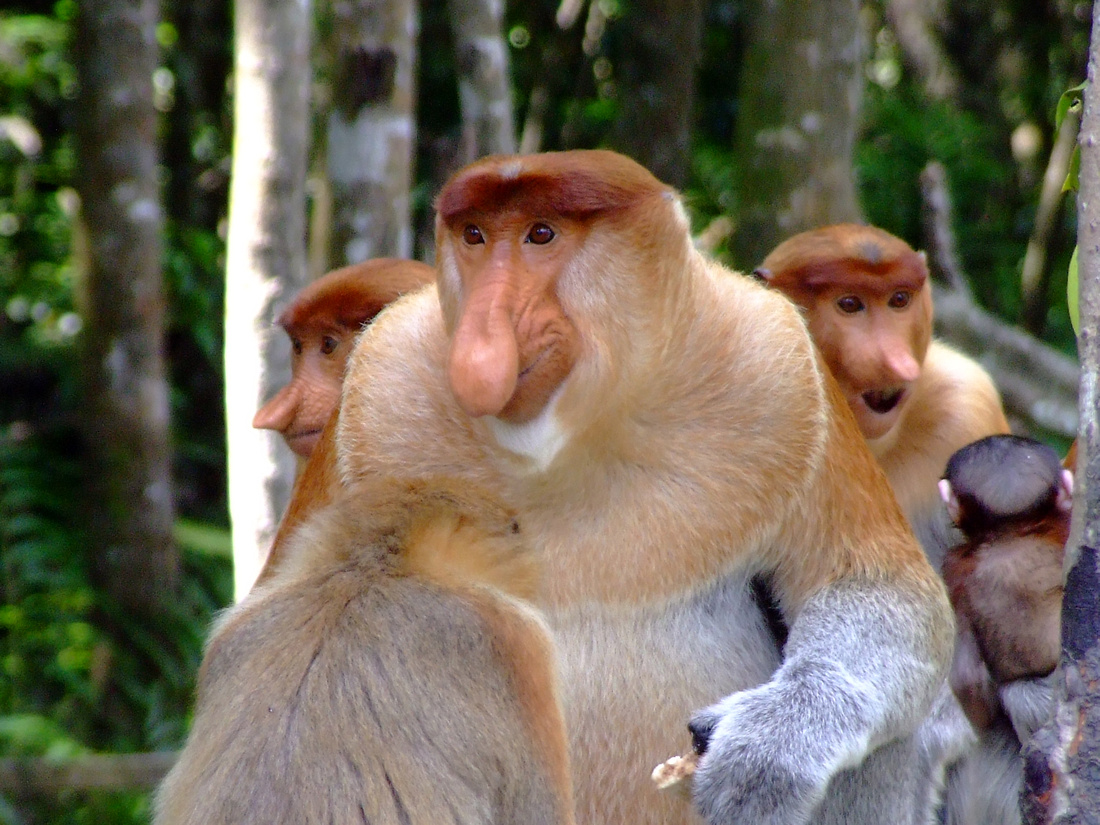
Proboscis monkey

KOTA KINABALU: A Kinabatangan resort yesterday pledged not to clear 100 acres of its land.

By doing so, Myne Resort hopes to create a wildlife corridor which will benefit wildlife such as the pygmy elephants, the orangutans, the proboscis monkeys and so on, said Tourism, Culture and Environment Minister Datuk Masidi Manjun after witnessing the signing ceremony of the memorandum of understanding (MOU) between Borneo Conservation Trusts (BCT), Sabah Wildlife Department (SWD) and Myne Resort.

He lauded the effort and said the resort was fulfilling their corporate social responsibility (CSR) by doing so. Altogether, the resort has 200 acres of land at Kampung Bilit, Kinabatangan.

“This effort will benefit conservation efforts. It is also a new trend among resorts that promise long-term benefits and profits for them,” he said.

He went on to say that foreign tourists were no longer keen on just watching tall buildings and developments.

“They are here to experience something different. And the resort, though this MoU, promises to provide them with the experience to see wildlife when they stay at Myne Resort. I am glad this initiative is taking place. It is part of the component plan, at Kinabatangan, in the creation of the wildlife corridor which will be used as the pathway and habitat for elephants, orangutans and proboscis monkeys so that they will continue to thrive,” he said.

Nevertheless, Masidi also mentioned of the challenges faced in getting people to change their mindset on preserving wildlife and nature.

“Why don’t you think of utilising your land other than palm oil plantation? Why don’t you think of the possibility of conserving it, and build a resort like Myne (Resort) has done and make more money in the future which is sustainable? But unfortunately, not many people think there is a future. Probably they think they will die tomorrow, I don’t know. I think we need to convince them that it is for the good of themselves and Sabah. The lower Kinabatangan has the richest biodiversity in terms of wildlife,” he said.

Meanwhile, SWD director Datuk Dr Laurentius Ambu hoped that more private agencies such as plantations and landowners will step forward and work with them and BCT to secure and re-establish ecological corridor for the wildlife at Lower Kinabatangan.

“We believe that conservation works could only be effective if we can share the responsibilities,” he said.

The managing director of Myne Resort, Ouh Mee Lan, on the other hand said the resort was popular due to its vicinity within the forest.
Myne Resort presently has 16 chalets and a longhouse, and in the near future and possibly this year, it will construct 40 new chalets.
Most of its guests are Europeans.

Source: Borneo Post

Tuesday, December 11, 2012

Breathing space for wildlife


Prime passage: Some tracts of forest are more important than others when it comes to strategic conservation, such as the Royal Belum State Park to the north, and the Temengor Forest Reserve to the south. They are connected by the Gerik-Jeli Highway (also known as the East-West Highway). Prime passage: Some tracts of forest are more important than others when it comes to strategic conservation, such as the Royal Belum State Park to the north, and the Temengor Forest Reserve to the south. They are connected by the Gerik-Jeli Highway (also known as the East-West Highway).
 
Development, logging and agriculture have already eaten away at vast tracts of forest. What is left is fragmented and of limited use to wild animals. This is why it is important to connect the tracts of good-quality forest that we do have.


A NATION resplendent with the grandeur of its wilderness – that is how we want the world to see us. Natural heritage forms an inextricable part of the Malaysian national identity, a fact evident in the tigers flanking the shield in the Malaysian coat of arms, and the rainforest so prominently featured in the Tourism Ministry’s “Malaysia Truly Asia” promotion campaign.


But with a growing population of 29 million exerting pressure for land to be developed into houses, commercial centres, farms and roads, the question of whether or not this image remains an identity backed by substance hinges on how we choose to expand.


Some tracts of forest are more important than others when it comes to strategic conservation, which is what prompted the formulation of the Central Forest Spine Master Plan, a policy under the National Physical Plan. It is to guide town planning efforts, and lists out key areas of forest which need to be protected. Under it, 20 primary and 17 secondary linkages act as forest corridors, creating a crucial link along the backbone of Peninsular Malaysia’s Environmentally Sensitive Area Network.


Development, logging and agriculture have already eaten away at vast tracts of forest, and much of what is left outside of this network is fragmented and of limited use to animals such as tigers, which require large territories to find sufficient food. This is why it is important to link up the tracts of good-quality forest that we do have.


So far, there have been some positive developments in favour of the Central Forest Spine (CFS) Master Plan, the latest being the Terengganu government’s announcement that it will freeze all development projects along an area that falls under Primary Linkage 7, a stretch of forest which connects Malaysia’s largest national park, Taman Negara, to other forests in the state. The decision was announced by state Industry, Trade and Environment Committee chairman Datuk Toh Chin Yaw after researchers presented their findings from months of survey.


The research group Rimba recorded 40 mammal species in the area, 15 of which are listed as “endangered” globally. These include the Asian elephant, the Malayan tiger, the Sunda pangolin, the white-handed gibbon and the Asian tapir.


There is hope that action will be taken for another important wildlife corridor that is similarly rich in fauna. Work by the World Wide Fund for Nature (WWF) at the site known as Primary Linkage 2 points to the need to protect a stretch of state-land forest. Currently vulnerable to development, this area forms an important connection between the Belum and Temengor forests in Perak. 

Read more: http://thestar.com.my/lifestyle/story.asp?file=/2012/12/11/lifefocus/12303096&sec=lifefocus

Friday, September 21, 2012

Stop the killing in Sabah


SABAH, without a shadow of doubt, is losing much of its wildlife to the rampant expansion of palm oil plantations.

State Minister for Environment and Tourism Masidi Manjun is on record as saying so.

Sabah Wildlife Department director Dr Laurentius Ambu agrees, as well as "Traffic", the worldwide wildlife trade monitoring organisation. The most recent scientific report has confirmed the disappearance of some 300 orang utan over the past eight years.

Protected species such as orang utan, rhinos, Proboscis monkeys, elephants and a raft of other species are all disappearing fast.

The loss of biodiversity is one thing, but the potential commercial loss caused to Sabah’s ecotourism industry runs into many millions of dollars annually.

 We call on Masidi Manjun to publicly and immediately declare a zero tolerance to the killing of protected wildlife.

This is not about creating a new law. It is about publicly reaffirming the existing law which is being blatantly ignored. A clear statement from the minister is urgently needed reminding criminals and law enforcement officials of the law.

Sean Whyte from Nature Alert commented, “If Minister Masidi Manjun is serious about protecting Sabah’s orang utan and other iconic species as well as the ecotourism industry, then we call on him without delay to introduce a "zero tolerance: no kill" policy for Sabah.

Failure to commit to this policy will undoubtedly attract ever more criticism, fewer orangutans and fewer tourists.

Last February we bent over backwards to assist the Malaysian Palm Oil Board (MPOB) with introducing a NO KILL policy and measures to ensure its enforcement. The MPOB made excuses as to why such a policy was not necessary — when everyone knows it is.

If the palm oil industry cannot be trusted to police themselves, the government must enforce the law.

We invite Masidi Manjun to respond with urgency to this request.

Source: Malay Mail 

Wednesday, September 12, 2012

New Forests in Sabah conservation deal

In November 2007, an Australian forestry investment firm has partnered with the Sabah state Government in Malaysia to create financial instruments for producers of palm oil to participate in the conservation of forests.

Sydney-based New Forests and the state of Sabah, in east Malaysia, will help protect about 34,000 hectares in the Malua Forest Reserve, which is home to groups of orang utan, Sumatran rhinos and clouded leopards.

Sabah will invest about $US10 million ($A11.4 million) in New Forests, which will then sell biodiversity credits in the protected Malua site on the island of Borneo, while the Malaysian federal Government retains ownership of the forest.

Similar to carbon credits, which create a financial incentive to reduce greenhouse gases, biodiversity credits are tradeable securities that reward activities supporting conservation and the sustainable use of native ecosystems.

 
 It is the first time any Malaysian Government has entered into an agreement to deliver wildlife conservation on a commercial basis, New Forests said.

Its managing director David Brand said the biodiversity credits will be sold to palm oil producers, energy companies and other businesses involved in the production of biodiesel - a clean-burning fuel made from renewable sources such as palm oil.

Mr Brand said the initiative was modelled on the US endangered species banking market, which allows the sale and purchase of endangered species credits to offset the negative impact of certain activities on those species and their habitats.

“Palm oil companies can help protect rainforests, private investment can make a return from rainforest rehabilitation and conservation and the government can offer a solution to current concerns around oil palm plantations,” he said.

“We hope that via a commercial approach to conservation, we may be able to contribute to a sustainable landscape on Borneo, that includes palm oil, timber production and wildlife conservation, all being managed on a commercial basis in harmony.”

 Sabah’s neighbour, Indonesia, is the world’s largest producer of palm oil.

 
Malaysia is expanding rapidly into the palm oil market, but most of the development has occurred in tropical rainforest areas, drawing the ire of environmental groups that claim it is contributing to global deforestation.

The Malua Forest Reserve is an integral part of the Ulu Segama-Malua Forest Reserves, one of the largest and most ecologically diverse blocks of natural forest in Sabah.

The Malaysian Government plans to terminate logging in the forest by the end of 2007 and support the future conservation management of the area for wildlife.
 
Source: http://www.theaustralian.com.au/business/markets/new-forests-in-sabah-conservation-deal/story-e6frg916-1111114984494
Picutres sources: deramakot.sabah.gov.my, insightsabah.gov.my, panoramio.com


Malua BioBank

The Malua BioBank is a revolutionary model for rainforest conservation that seeks to rehabilitate and preserve 34,000 hectares (80,000 acres) of critical habitat for orangutan and other wildlife. Located in Malaysia on the island of Borneo, the Malua BioBank was created in an innovative public-private partnership with the Sabah State Government as an investment in the rehabilitation and protection of the Malua Forest Reserve. This pioneering initiative was launched in August 2008 and seeks to deliver on the premise that conservation of biodiversity and ecosystem services has value that can compete with other commercial land uses, such as logging and agribusiness. The Malua BioBank sells Biodiversity Conservation Certificates, with each certificate representing 100-square meters of restoration and protection of the Malua Forest.

In order to ensure reliable, long-term forest stewardship, the Sabah Government has committed to halt logging in the Malua Forest for a period of at least 50 years. During this time, the Malua BioBank Conservation Management Plan will be implemented in order to improve wildlife habitat and promote ecosystem service functions, such as carbon sequestration and storage in Malua's growing forest. The Malua Trust, an endowment managed by HSBC Trustees, will oversee and finance the conservation management of the Malua Forest into the future. Learn more about the Conservation Activities underway at the Malua BioBank. 

 When Datuk Musa witnessed the signing of an agreement between the State Forestry Department and New Forests Private Limited to set up the Malua BioBank in Kota Kinabalu on 14 August 2008, he described it as a firm step towards conserving the natural heritage and a “win-win” move. He said the establishment of the Malua Wildlife Habitat Conservation Bank (Malua BioBank) would yield multiple benefits.

“What we have witnessed is a loud statement that we are extremely serious with conservation of the forests including the natural habitat for wildlife,” he said.

He considered the event as significant because according to him it was to protect a sizeable area of the state’s rich biodiversity, reputed to be one of the most beautiful on earth. The Chief Minister added that it was recognised that the only way to have meaningful conservation is through “habitat conservation”, referring in this case to the 34,000-hectare conservation area of Malua BioBank.

Elsewhere, the Malaysian conglomerate, Sime Darby would also work closely with the Forestry Department with which it has agreed in principle to fund a RM25 million orang utan rehabilitation project.

The Chief Minister also said that Yayasan Sabah, through its timber-operating arm Rakyat Berjaya Sdn. Bhd. had similarly voluntarily ceased logging operations in the Malua Forest Reserve at the end of 2007.

Source: http://www.maluabank.com/
Picture source: http://www.life-size-media.com/blog

Monday, September 10, 2012

Protect the Orang utan

 Orang utan is classified as endangered animal as its numbers are degrading due to their habitat being destroyed, fragmented and poaching. According to a wildlife study, orang utans need large swaths of forests for them to survive.

The findings by Malaysian, British and Swiss researchers stating that high-quality natural forests are most preferable by the orang utans. To allow the orang utan to disperse naturally, a sufficient network of high-quality natural forest and dispersal corridors must be restored across Borneo and Sumatra.

Our unique wildlife and biodiversity are our natural heritage, and we owe it to ourselves not to deny our future generations these privileges and environmental treasures that we now enjoy. Therefore, Sabah is set to intensify its green effort and bring more value to its conservation efforts in the state.

Sabah had always been proactive in its task to monitor wildlife and to enforce laws against wildlife poachers and killers. For instance, the Ulu Segama - Malua project which covering some 240,000ha of production forest reserves is designated for natural forest management and orang utan conservation.

The Federal Government is also ready to help Sabah in its conservation of orang utan by financially assisting the state to acquire land between areas planted with oil palm. According to the Plantation Industries and Commodities Minister Tan Sri Bernard Dompok, the one of the way to help this conservation is by buying parcels of land, largely owned by oil palm plantations, to be used as forest corridors.

Meanwhile, the 35 year State Species Action Plans for the orang utan, elephant and rhinoceros has been launched in Sabah as a platform for better protecton of the 3 flagship species. State government and the plantation industry will collaborate in implementing these Species Action Plans. The plans are part of the nation's continued commitment towards conservation and continuation of its unique flora and fauna.

Sabah to study manhandling of fauna in conservation area by visitors

KOTA KINABALU: Photographs of various marine wildlife including turtles and giant clams being manhandled by visitors at what appears to be the Tunku Abdul Rahman Marine Park near here are prompting a review of procedures in the conservation area.
 
Among the measures to be implemented are the posting of more signs warning visitors against such action, said state Tourism, Culture and Environment Minister Datuk Masidi Manjun.

He said an investigation was also under way to verify the authenticity of the pictures posted on Facebook.
“Obviously we are taking this seriously but we also have to verify whether it was indeed at the Tunku Abdul Rahman Park and if so, whether these were locals or foreigners.

“If they were foreigners, they would have likely been brought to the islands by tour agents, who we will track down,” he said yesterday.

He added that Sabah Parks, which is responsible for the marine park, would blacklist tour agents whose clients continued to flout the regulations.

Masidi said the ministry needed the help of licensed tour guides to inform it of illegal tour operators bringing visitors to the islands.

Sabah Tour Guides Association member David Tseu had claimed that marine park visitors who had taken pictures of themselves holding turtles and giant clams were brought there by unlicensed tour operators.

He claimed that the illegal operators were operating “rampantly” and that the authorities did not appear to have the resources to crack down on them.

Recently, Netizens reacted in anger over a photo of tourists posing with a turtle.

The photo, uploaded by wildlife conservation group Rimba, showed three people with their hands on the turtle's shell while they posed in the water, allegedly in the Perhentian Islands, off Terengganu.

A 34-second video of the incident was also uploaded.

Source: The Star

Thursday, September 6, 2012

Eco Voluntourism in Borneo

Exotic wildlife is Borneo's number one tourism draw card, but the region is also home to some of the world's most endangered species.

ORANG-UTAN
Dire straits:
Known as the man of the forest, a sighting of this swinging redhead is high on the agenda of most visitors to Borneo. For good reason too, as wild orang-utans are found only in Borneo and Sumatra and their existence is increasingly tenuous. Historically, the apes have had the misfortune of inhabiting tracts of land that humans use for housing, farming and palm oil plantations. If that's not tough enough, the world's largest tree-climbing mammal is also hunted for food and illegal trafficking. The World Wildlife Fund predicts that wild orang-utans may be extinct within a few decades, so the work being done now to protect them is crucial.

What's being done:
Borneo has many orang-utan sanctuaries that care for orphaned and trafficked apes. Sepilok Orangutan Rehabilitation Centre in Sabah allows visitors to interact with the rehabilitated primates in a semi-wilderness environment. At feeding times - when the apes are provided with bananas and milk - a sighting is guaranteed.
Orphaned orang-utans have a tough time as the bond between mother and baby lasts for seven years and is one of the closest in the animal kingdom. Tourism is crucial to the survival of the species, improving awareness and providing a financial incentive for their protection.

Lend a hand:
For clients who want to help some of our shaggy relatives, Orang-utan Odysseys offer tours where participants must raise a minimum of $1500 each before embarking on the trip. The fundraising allows participants to access the Care Centre where they can hold and play with the young orang-utans. The funds are then distributed to orang-utan initiatives such as the Australian Orang-utan Project. For more information, visit www.orangutanodysseys.com 

GREEN AND HAWKSBILL TURTLES
Dire straits:
Beaches are crucial to the survival of turtles, who swap the sea for the shore only to lay their eggs. They return to the same beaches year after year and are very sensitive to changes in the coastal environment. This is compounded by the hunting of turtles and their eggs for meat and the illegal trade of hawksbill turtle shells. Another great strain on the turtle population is their accidental capture in fishing nets.

What's being done:
It's vital that egg-laying beaches are protected and monitored. This work happens in the aptly named Turtle Island Park - three islands that lie off the coast of Sandakan in Malaysian Borneo. Green turtles lay their eggs between July and October while Hawksbill turtles prefer to deposit theirs from February through to April. The egg-laying takes one to two hours and is an unforgettable encounter with nature. The mother uses her flippers to excavate a sand chamber and appears to be crying as glands behind her eyes secrete salt during the laying process.

Lend a hand:
Turtle landings happen at night so an overnight stay is a must. If you visit during peak season you are likely to see the turtles scooting up the sand to dig and deposit. At other times, you can observe the baby turtles tackle the life-or-death drama of their first swim. It's survival of the fittest or perhaps the luckiest as seagulls wait to snatch the hatchlings on their maiden voyage. Visitors can watch the rangers tag each new hard-shelled arrival with a label that reads "return to Turtle Island Park". Adventure Destinations offers a four-day Turtles, Orang-utans and Wildlife Safari, which includes an overnight stay on Turtle Island, is priced from $1013. For more information, visit www.adventuredestinations.com.au 

BORNEO PYGMY ELEPHANT
Dire straits:
With less than 1500 pygmy elephants in the wild today, this lumbering creature is in danger of being wiped off the genetic map. The population is threatened by logging and human development that reduces their access to food - and with a staple diet of over 150kg of plant matter each day they need a lot of it to survive. Although placid, they are renowned for being hungry, taking it to the extreme with their love of the stinky durian fruit which they roll in mud and then eat whole, spikes and all.

What's being done:
Two thirds of the pygmy elephant population is found in Sabah, while the remaining cluster is found in Indonesian Kalimantan. A study by the World Wildlife Fund found that the Indonesian population was too small and fragmented to support a viable long term habitat. Their focus has therefore turned to maintaining a Corridor of Life to enable the creatures to travel between broken up forests in the Sabah region safely. The Malaysian government also has plans to open an elephant sanctuary in Sabah.

Lend a hand:
Volunteer organisation GVI offers travellers the opportunity to work with the Orang Sungai community to protect their home - as the surrounding rainforest habitat is under threat from the effect of logging and palm oil plantations. Located on the Kinabatangan River in Borneo, the site is home to a diverse array of animal species, including orang-utans, pygmy elephants and proboscis monkeys. The two-week trip is priced from $1692. For more information, visit www.gviaustralia.com.au 

Monday, August 6, 2012

Stop the slaughter, save orang utans in Borneo


PETALING JAYA - Malaysian authorities have been urged to help stop the slaughter of orang utans in Borneo.

Environmental groups, who made the call in the wake of reports and photographs of orang utans being shot dead by plantation companies, urged Malaysia to work with Indonesian authorities to stop the killing.

According to a report in Britain's Daily Mail, oil palm plantation managements have resorted to shooting orang utans as part of "pest control" exercises to protect their crops.

This report followed earlier allegations that companies had offered bounties for the heads of orang utans in Borneo after blaming the animals for destroying their young palm trees.

In a phone interview with theSun, Chris Shepherd, the Southeast Asia deputy director of Traffic, a wildlife trade monitoring network, said investigations should be carried out and the perpetrators brought to book.

The situation with species like orang utans is becoming more critical and need urgent attention, he said adding that although the quality of law enforcement in this area has improved, illegal killing of wildlife and illegal wildlife trade still go largely unpunished.

"The list of threatened species is getting longer, not shorter," said Shepherd.

"The killing of the orang utans by Malaysian oil palm companies damages the image of the country abroad and needs to be addressed by the Malaysian authorities." said Malaysian Animal Rights and Welfare Association president N. Surendran.

He urged the government to exercise its power to terminate the licences of plantation companies found to have killed orang utans.

Besides being endangered through such action by planters, orang utan face rapid depletion of their numbers due to rampant land clearing in areas of their natural habitat.

Non-governmental organisation Nature Alert said 300 orang utans have been killed over the last eight years due to expansion efforts by the palm oil industry.

Conservationists say the animals have had to encroach on the plantations because their own habitats have been destroyed.

The action of companies, including Malaysian enterprises, in the alleged "extermination" and burning of forests for the purpose of land clearing for plantations in Kalimantan, across the borders of Sabah and Sarawak have also been highlighted by NGOs.

Although the concern on the Malaysian side of Borneo is more towards the destruction of the animal's habitat, the issue took an intensely grim turn when gruesome photographs of orang utan killings in Kalimantan emerged.

In February, four men including the Malaysian manager of an oil palm plantation in East Kalimantan went on trial for killing orang utans and other endangered primates.

All four were reportedly arrested in November after pictures of them with the slaughtered primates, were circulated by local villagers.

The manager, Phuah Chuan Hun, and his employee Widiantoro allegedly paid two men one million rupiah (RM330) for each orang utan killed and 200,000 rupiah (RM66) for monkeys, AFP had reported.

Malaysian Animal Welfare Society president Shenaaz Khan praised the action taken by the Indonesian authorities which put the four employees of the plantation – including its Malaysian manager – on trial for the killing of orang utans.

She, however, condemned the inaction of the Malaysian government (where the action of plantation companies are concerned).

The Sumatran Orangutan Conservation Programme had recently highlighted the dangers to wildlife from forest fires allegedly set by oil palm plantation companies to clear land for planting of crops.

The Department of Wildlife and National Parks (Perhilitan), responding to the matter, clarified that its jurisdiction under the Wildlife Conservation Act 2010 is restricted to Peninsular Malaysia and the Federal Territory of Labuan.

-thesundaily

Source: http://www.malaysia-chronicle.com/index.php?option=com_k2&view=item&id=37686:stop-the-slaughter-save-orang-utans-in-borneo&Itemid=2&tmpl=component&print=1


Sunday, July 8, 2012

Japanese children help rescue Sabah wildlife


KINABATANGAN: Schoolchildren in Japan have come to the rescue of endangered and “trapped” wildlife here by donating money to help buy forest land and prevent groups of the species from being isolated from each other.

The rescue of Sabah’s endangered pygmy elephants and orangutans is already paying off with sighting of animals crossing over from one area to another after having been corralled in increasingly smaller areas by the growing presence of plantation and timber companies.

A 6.2-acre plot of land, identified as a key ecological corridor for elephants and orangutans in Lower Kinabatangan, was recently secured by Borneo Conservation Trust (BCT) with financial support from Fukuyama Zoo, Japan.

According to Dr Toshinori Tsubouchi, chairman of BCT Japan, funds for the land purchase were donated by schoolchildren from Japan who are keenly aware of the plight of the Bornean elephant through educational talks held by the BCT Japan in their schools.

He said Fukuyama Zoo’s concern over Bornean elephant conservation in Lower Kinabatangan led them to spearhead a fundraising campaign for the land purchase.

Sabah Wildlife Department director, Dr Laurentius Ambu, in a joint statement with BCT, expressed his appreciation to Fukuyama Zoo for its effort and support in securing this “link” to re-connect fragmented forests in the state.

The purchase of the land, he said, was “an achievement and another positive step towards the department’s vision to secure the ecological corridors for the wildlife population”.

This particular plot will allow the migration of elephants from one part of the Lower Kinabatangan Wildlife Sanctuary to another.

Raymond Alfred, BCT’s head of conservation and research, explained that this concept or model could be duplicated in Sabah as long as corporations know where and how they can contribute.

Vital links
Alfred said that part of BCT’s plan to secure the “links” is to get the participation of the commercial sector such as agricultural developers and product suppliers in conservation efforts. This way, they would know how their contributions are used.

“Through implementation of best management practices and restoration of riparian reserve, we would like to see re-established the vital wildlife corridors linking key habitats and protected areas to the larger forest landscape in Segaliud Lokan, Malua and North Ulu Segama”, he said.

The sighting of an “older” male orangutan using a bridge spanning Sungai Resang in Lower Kinabatangan last month, proves that such structures and corridors are vital links between habitats and populations.

Primate researcher from Kyoto University, Yosuke Otani, who observed the crossing on a bridge made out of used fire hoses from Japan, said it took the primate about 30 seconds to cross over without any difficulty.

The unhindered crossing excited wildlife experts here with Ambu re-emphasising the importance of such corridor in the Kinabatangan Wildlife Sanctuary.

Alfred said that two orangutans were also observed using another crossing built by Hutan and BCT in Sungai Menanggul.

Improving and retaining the existing riparian reserve along the Kinabatangan River will allow species such as elephants and orangutans access to food sources and establish crucial genetic links between populations.

BCT is among a group of organisations racing against time to assist Sabah wildlife authorities improve habitat connectivity for the orangutans in Lower Kinabatangan. It is also hoping to re-establish a long-term biodiversity corridor with the help of land developers such as plantations and timber companies.

Alfred said that BCT is working closely with several major stakeholders to develop a follow-up plan to re-establish a biodiversity corridor from the Kinabatangan Wildlife Sanctuary to other continuous forest reserves such as Segaliud Lokan Forest Reserve, Malua Forest Reserve and North Ulu Segama (Bukit Piton Protection Forest).

Source: http://www.freemalaysiatoday.com/category/nation/2012/07/06/japanese-children-help-rescue-sabah-wildlife/