Showing posts with label conservation. Show all posts

Saturday, August 10, 2013

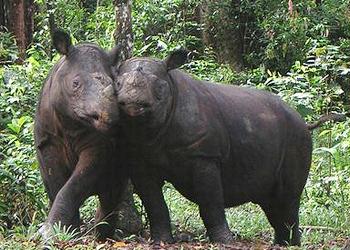
Sabah in no rush to send rhinos overseas for breeding


KOTA KINABALU: Sabah is in no rush to send its rhinos to zoos abroad for breeding amid fears that the animal faces extinction in Borneo, said state Tourism, Culture and Environment Minister Datuk Masidi Manjun.

He said it would be the state’s last resort to send rhinos overseas for breeding.

“We are looking at all available options and the most important thing is to ensure that these animals will not become extinct,” he said.

“However, to send them overseas will be our last resort,” he said at the Sabah Muslim Cabinet ministers’ Hari Raya open house at Likas Sports Complex on Saturday.

Asked about the growing calls for the near extinct rhinos to be sent to a US zoo for breeding purposes, Masidi said that it was hard to get rhinos to mate due to geographical factors.

“Rhinos are loners. They don’t really move in packs.It makes it much ,more difficult for our rhinos to find mates,” he said.

However, he said he would study various recommendations from experts before discussing with the Cabinet on the options to ensure the species survives in Sabah.

Source: The Star

Monday, July 29, 2013

A mangrove forest stays put in KK’s backyard


Kota Kinabalu Wetlands Center, KK City's last mangrove frontier

A lush mangrove forest  digs in its heels literaly in the backyard of Kota Kinabalu city, thanks to the city folks’ commitment to conservation and the wetland birds that inspired it.

Sheltered well away from the hustle and bustle of the city, the scenic sanctuary is all that remains of Kota Kinabalu’s once extensive mangrove forests that fringed the intertidal mudflats and coastlines of the city.

The Wetland Centre's 1.5 km network of boardwalk gives visitors an up-close experience with the sights and sounds of the mangrove forest.
The Wetland Centre's 1.5 km network of boardwalk gives visitors an up-close experience with the sights and sounds of the mangrove forest. 

A mere ten minutes’ drive from downtown Kota Kinabalu, the reserve offers visitors a window to the mangrove ecosystem, home to a wide variety  of birds, insects and fish species unique to the mangrove habitat.

Formerly known as the Kota Kinabalu City Bird Park, the wetland reserve covers more than 24 hectares (60 acres) of mangrove forest which was gazetted as protected reserve by the state government in  1996.

The Rufous night heron (Nycticorax caledonicus) are common sightings in the mangrove park during early morning.
The Rufous night heron (Nycticorax caledonicus) are common sightings in the mangrove park during early morning. 

Visitors can walk comfortably along the network of boardwalks(1.5km) traversing the mangrove forest while keeping an eye for the brilliant collared-kingfishers, white egrets combing the lagoon for a meal, the eagles and the elusive night heron on the treetops. One can also see the shy iguanas, mud crabs and occasional snakes under the stilt roots of the mangrove trees.

Over the years large tracts of mangrove forests have given way to human habitation. Much of the city of Kota Kinabalu occupies land that was once under mangrove forests.

Mangrove forests resembling the one in the Kota Kinabalu Wetland Centre are native to the saline coastal areas, particularly in intertidal mudflats and sandbars. The ebb and flow of the tide washes the tidal woodland twice a day and replenishes the mangrove trees with oxygenated salt water and a fresh supply of nutrients.

The unique wetland habitat attracts not just the birds but also human visitors, some from very far away. Among them were Len Matheson from New Zealand who came to catch a glimpse of the birds and wildlife that frequent the reserve.

While there are nine major mangrove species in the reserve, the most commonly found include the Api-Api Putih, Bakau Minyak and Pedada, to name three.  Api-api putih(Avicenna Alba) can be readily recognised by its leaves which appear glossy green on  top and paler on the underside, and distinctive pencil-shaped roots protruding above the ground or water which enable the plant to breathe. Bakau Minyak (Rhizophorbia apiculata) has arching, stilt root system, and spear-shaped fruits, while the Pedada (Sonneratia alba) has typically broad, oval shaped leaves as well as cone-shaped roots that stick out straight out of the water.

The extensive maze of roots provide the ideal shelter from predators for commercially important juvenile marine species including prawns, mangrove jacks, barramundis and mud-crabs.
The extensive maze of roots provide the ideal shelter from predators for commercially important juvenile marine species including prawns, mangrove jacks, barramundis and mud-crabs. 

The mangrove forest dominates the wetland ecosystem owing to its unique ability to withstand the rigors of highly saline and brackish inter-tidal water along estuaries, coastlines including saltwater and freshwater marshes. The trees provide the building blocks of a complex, interwoven food chain by producing large amounts of leaf litter, fruits and other organic materials. They also supply nutrients for animals at the lower end of the food chain such as worms, snails, mussels, oysters and mollusks. In turn, these detritus eaters become a source of protein for larger predators including barramundi, mangrove jacks, herons and mud crabs and, high up on the food chain, other animals, including humans.


Patiently waiting, A Striated Heron(Butorides striata) stalks its prey in the mangrove reserve.
Patiently waiting, A Striated Heron(Butorides striata) stalks its prey in the mangrove reserve. 

"The best time to visit the mangrove forest is  early morning when resident birds and other wildlife in the park go out looking for food," said KKWC Conservation Science Officer Siti Joanni Matlan.

The lush mangroves of the KKWC play an important role in minimising pollution by absorbing nutrients. 

They also  offer protection against storms, including tsunami, as well as common wave actions that cause coastal erosion. Its tangled labyrinth of roots forms an ideal refuge and nursery ground that harbours many species of juvenile ocean fish, including lobsters, crabs and prawns.

High in the mangrove canopy, a cacophony of cicadas make their presence felt, adding to the rich luxuriant splendor of the tropical mangrove forest.

An assembly of mangrove trees securely anchored in their extensive stilt roots

For avid nature lover, Fung Sai Hou, the mangrove park provides a rare attraction in the urban heart of Kota Kinabalu.

"The mangrove center is an idyllic retreat not far from the city center, it’s a great place for bird-watchers and anyone who enjoys connecting with nature," he said. -Insight Sabah

Wednesday, July 17, 2013

15 times the size of Penang Island That’s how big Sabah’s single largest conservation area is


 KOTA KINABALU: Sabah now has one of the single largest conservation areas in the country. 

It is nearly 15 times the size of Penang Island.

The area of more than 400,000ha encompasses the three crown jewels of Sabah’s environmental conservation efforts – Danum Valley, Maliau Basin and Imbak Canyon.

Over the past several years, the Sabah Government has been linking tracts of the forests in the three conservation areas by re-classifying those designated for logging and other commercial activities into protected zones.

Sabah Forestry Department director Datuk Sam Mannan said that the last piece of the puzzle fell into place when the State Assembly passed the amendments to the Forestry Enactment 1984 on Thursday under which 23,135ha of forests were re-classified as protected areas.

“We now have this huge conservation area that is totally protected and cannot be taken away,” he said yesterday.

He said that work was under way to restore the degraded areas of the newly protected areas. 

He said that these were once commercial forest reserves.

Management plans for places like Gunung Rara, Ulu Segama and the Malua Forest Reserve were now being drawn up, Mannan added.

He said that the restoration work involved re-planting native tree species in the affected areas.

The forest link between Danum Valley, Imbak Canyon and Maliau Basin was also crucial as some of these areas were habitats for wildlife such as the orang utan, he added.

He said that portions of the protected areas such the Malua Forest Reserve also served as gene banks for the native plant species.

Source: The Star

Friday, July 12, 2013

Danes' conservation help lauded

 
KOTA KINABALU: State Tourism, Culture and Environment Minister Datuk Masidi Manjun has applauded the continuous collaboration between Yayasan Sabah and Danish-based NEPCon for the management of the Maliau Basin Conservation Area (MBCA) for the next 10 years. 

"Such collaborations between two countries are most welcome, especially between developed countries and developing countries, like Malaysia. 

"It is in the world's interests that we cooperate in preserving rainforests and our natural environment." 

Masidi was speaking at the signing of a memorandum of understanding between Yayasan Sabah and NEPCon, which is a non-profit organisation in Denmark, on the revision of the MBCA Management Plan 2014 to 2023, here. 

He said NEPCon, on behalf of the Danish government, had undertaken the responsibility of collaborating with the state in the preparation of the management plan 10 years ago. 

"This time, they took their own initiative, in support of Yayasan Sabah, to raise funding to review the MBCA management plan, which expired last year. 

"I encourage more people from Scandinavian countries to collaborate with the government in the environmental fields of strategic projects that not only influence the state, but the global community, too." 

NEPCon was approached for assistance when the MBCA Strategic Management Plan 2003 expired last year. 

The latter then secured funding of about RM1.17 million from Aage V. Jansen Foundation in Denmark for the purpose. 

Masidi also thanked Ikea, a Swedish organisation involved in environmental projects, for being one of Yayasan Sabah's biggest sponsors for its conservation programmes in the MBCA.

The programmes, which include forest restoration and rehabilitation, were initiated through Ikea in 1998.

"Despite having no stores in the state, Ikea has been in the state for the last 10 years through efforts to conserve pristine areas, as well as forest rehabilitation.

"Malaysia, in general, and Sabah, in particular, is appreciative of the crucial contributions that the Scandinavian countries -- Denmark and Sweden -- have given to the state." Bernama

Tuesday, July 9, 2013

Collaboration on Revising Maliau Basin Conservation Area Management Plan

Pic: Insight Sabah
"Recognizing the uniqueness of the area, in 1981 Yayasan Sabah voluntarily designated Maliau Basin as a Conservation Area, for the purposes of research, education and training, along with Danum Valley Conservation Area further to the east." - Yayasan Sabah

A Memorandum of Understanding (MoU) on the “Revision of Maliau Basin Conservation Area Management Plan” was signed between Yayasan Sabah and Nature, Ecology & People Consult (NEPCon) of Denmark, recently.

The MoU aims to examine and update the Maliau Basin Conservation Area Strategic Management Plan for year 2014 - 2023.

The MoU shows the interest and dedication in ensuring the protection and conservation of Sabah’s natural heritage.

NEPCon was one of the consulting firms appointed under the four-year collaborative project (1999-2002) between Yayasan Sabah and DANCED (Danish Cooperation for Environment & Development)/DANIDA (Danish International Development Assistance) to provide technical assistance.

NEPCon is in the effort to promote sustainable forest and nature management and use by working towards to encourage the use of natural resources worldwide in sustainable ways.

Through this joint-project, they have formulated the first Strategic Management Plan for Maliau Basin Conservation Area 2003-2012.

The completion of the Maliau Basin Studies Centre and related infrastructures and facilities is one of the success that has been achieved besides seeing a lot of developments and changes in the Maliau Basin Conservation Area.

NEPCon has also been successful in securing funding from Aage V Foundation, Denmark amounting to EURO294,875 (RM1.2 million)

With the success of the first Strategic Management Plan for Maliau Basin, NEPCon has been invited once again to examine and update the Management Plan for year 2014-2023.

In the signing ceremony, Yayasan Sabah was represented by Datuk Peter Pang En Yin while NEPCon was represented by its director Peter Feilberg, and witnessed by Tourism, Culture & Environment Minister, Datuk Masidi Manjun.
 

Sunday, July 7, 2013

MoU on joint turtle conservation signed

 
The Sabah Wildlife Department (SWD) has signed a Memorandum of Understanding (MoU) with Trekkers Lodge Sdn Bhd for turtle conservation on Libaran Island.
 
Both parties are collaborating on establishing a Turtle Conservation Programme on the island which includes, creating awareness programme for the locals and visitors on the conservation value of sea turtles, undertaking research projects to better understand the life cycle of sea turtles of Libaran island area and to create research programmes on the animal for local and international students.

Through the MoU, SWD will offer expertise, advice, training and monitoring assistance at the turtle hatchery and in situ operations to Trekkers Lodge Sdn Bhd in areas related to the collaboration.

The Department will also train Trekkers Lodge staff members Sdn Bhd to become honorary wildlife wardens who can then exercise enforcement with regards to the protection of the species.

The Department and the company were represented by SWD Director, Dr Laurentius Ambu and Trekkers Lodge Sdn Bhd Managing Director, Alexander Yee, at Rumah Terbalik respectively which is also operated by the latter, in Tamparuli recently.

Dr Ambu in his speech commented that there is a dire need to carry out turtle conservation in the state and he welcomed the initiative taken by Yee, describing it as another good example of the state collaborating with dynamic private enterprises and local community to protect the natural resources and environment.

“The department is always ready and supports the efforts of cooperation in managing and carrying out wildlife conservation activities in Sabah. I am confident that this collaboration with a private enterprise and the local community in carrying out conservation works will lead to a success,” added Dr Ambu.

Libaran Island lies at the Northeast coast of Sabah, about 40 minutes boat ride from Sandakan and five minutes away from Selingan Island and one of the main islands of Turtle Islands Park which support about 450 inhabitants whose main livelihood being fishing.

Besides safeguarding the turtles and their eggs, the collaboration will also allow the inhabitants to benefit from the conservation-based activities.

Eleven staff members of the Trekkers Lodge, Libaran Division, who were the inhabitants of the island including Yee and Libaran Village Chief, Sarief Nasidip Uyung, were inducted to be Honorary Wildlife Warden during the MoU signing ceremony, after undergoing a one-week training course in February 2012, conducted by the Sabah Wildlife Department.

Tuesday, June 25, 2013

Semporna's Sea Turtle Week


A Sea Turtle Week was held in Semporna in conjunction with the World Sea Turtle Day on June 16. Many environmental awareness programmes were conducted during the week.

Five secondary schools took part in a competition to create turtle replicas from recycled materials. The colourful creative exhibits, equipped with key messages on turtles, were displayed and judged at the opening of the Turtle Exhibition, jointly organised by WWF-Malaysia, Sabah State Library and Semporna District Education Office, at the Semporna Library on June 19.

SMK Datuk Panglima Abdullah has won the competition followed by SMK Tagasan and SMK Agama Tun Sakaran.

A booth to sell handicrafts made from pandanus leaves has been set up by the Wanita Pulau Omadal, a local community group from Omadal Island. The profits that they made will be used to support conservation efforts in the Semporna Priority Conservation Area.

Volunteer group, Green Semporna, was also present to recruit new members especially among students.

A life-size Green turtle statue named Si Bokko Kalasahan Ku', which in Bajau means "My Lovely Turtle" was the main attraction of the exhibition.

More than 100 pledges were written on it as visitors to the exhibition penned down their heart's call to save these endangered marine treasures and the statue will remain a fixture at the Semporna Library.

Apart from that, posters of turtles were displayed in the hall to educate visitors on the importance of these endangered marine creatures to Semporna's ecosystem.

WWF-Malaysia's Sulu-Sulawesi Ecoregion Programme Manager Robecca Jumin said it is important to run the sea turtle protection programme in Semporna, not only because the nesting and foraging turtle population is significant, but also sea turtles are key attractions in this area for tourist from all over the world.

Thursday, June 20, 2013

Embedded-type tracking device for orangutans in Sabah

A new tracking device that can be embedded into the orangutan is revolutionising the way the animals are tracked and will soon help researchers understand how to help the primates survive in the jungles of Sabah.

The Tabin Orangutan Project (TOP), which is co-managed by Orangutan Appeal UK, a United Kingdom-based non-governmental organisation, and the Sabah Wildlife Department, is the first in the world to use the embedded-type tracking device on the orangutan.

Previous attempts to track orangutan with collars and other tracking devices were not successful because the animals were adept at removing them.

File photo dated Oct 24, 2009 shows an orangutan making its way across a rope at the Sepilok Orangutan Reserve near Sandakan. Previous attempts to track orangutan with collars and other tracking devices were not successful because the animals removed them. AP

Each device cost RM1,454 and has enough power in its battery to last a few years. Data had been collected using the devices since 2010, said primatologist James Robins, who heads TOP. Robins is currently tracking eight orangutan and half of them are females.

“One of our orangutan just gave birth a few weeks ago and we are now tracking both mother and child. Both are doing well.”

He said there was a misconception that conservation work was over the moment captured or displaced orangutan were rehabilitated and released into the wild.

“Nobody knows what happens to them after that because it is hard to follow them. This is the purpose of this study,” he said.

The data collected will be used to publish a series of papers, which would discuss everything from their feeding to ranging behaviours.

This will then serve as a blueprint for forestry and wildlife departments in countries with orangutan populations to rehabilitate the primates. Robins said the team tracked the released orangutan every day as they roamed the jungle.

“Currently, all eight of our orangutan have been implanted with the tracking device. We follow them from 5.30am, when they leave their nest, until they make a new nest for the night around 6.30pm, before we return to camp.”

He said the orangutan had lost much of their habitat to deforestation. The food quality in Tabin, which is a secondary forest, was also less nutritious.

“It’s all about their diet. Food like ginger and rattan do not give enough energy since these animals spend the entire day foraging.”

It was estimated that there were now about 1,400 orangutan in Tabin and 11,000 in the whole of Sabah. Robins said Sabah had a stable environment for the orangutan compared with other countries.

“If I were an orangutan, I would want to be in Sabah.”

Most of the deforestation in Sabah had happened in the past, he added.

Before man began encroaching on the forests, Robins said there could have been hundreds of thousands of orangutan in Borneo.

He said one way to ensure that orangutan populations grew was to join the pockets of forest in Sabah into a central forest spine. This would allow the orangutan to roam throughout the state and breed, allowing better genetic diversity.

“It will be the biggest factor in increasing population growth.”

Four-wheel-drive vehicle manufacturer Land Rover, which is part of the Sime Darby Group, had played a big role in helping Robins.

They used their own “Approved Permit” to import a Land Rover Defender donated by Orangutan Appeal UK for TOP to use in Sabah.

Land Rover also donated RM16,500 to TOP for its research.

Land Rover managing director Syed Mudzhar Syed Ali said the sponsorship was given to assist in logistics and tracking exercises involving the orangutan.

Speaking to journalists in Tabin last week, he said the company was committed to helping ensure the survival of the orangutan.

“Land Rover is returning to the Tabin reserve after our first visit last year, when our donation was used for the construction of an extension to the research base.

“Our return this time around is further testament of Land Rover’s commitment and concern for wildlife conservation in this country. This initiative also allows us to raise the level of awareness on this protected species and the importance of creating an environment that enables their continued existence for centuries to come.”

The orangutan is one of nine animals under the Sime Darby Group conservation efforts carried out through its foundation, Yayasan Sime Darby. Syed Mudzhar said last year, the company brought in its customers from Sabah to visit Tabin.

“In the future, we are looking at bringing in our customers from across the country to visit Tabin. We are hoping that our high profile customers will help spread the message of orangutan conservation.”

Source: Borneo Bulletin

Monday, June 17, 2013

Sabah to host conservation training programmes for officers from Asean, Africa, South Asia


Sabah's environmental conservation efforts is set to become the backdrop of an international training programme under a joint Malaysian and Japanese effort.

The Integrated Biodiversity and Ecosystem Management Training Course would see government officers from the Asean region as well as Pacific islands, South Asian and African nations undergoing three weeks training at various Sabah authorities - the Forestry Department, the Wildlife Department and Sabah Parks.

The training would be coordinated by Universiti Malaysia Sabah (UMS) with funding provided on a 50/50 basis by Wisma Putra under the Malaysia Technical Cooperation Programme and Japanese International Cooperation Agency (JICA).

UMS Institute for Tropical Biology and Conservation (ITBC) acting director Assoc Prof Dr Charles Santhanaraju Vairappan said the training would involve 20 participants per year from 2013 to 2015.

''The training is aimed at providing them the knowledge and skills on conservation management from planning to implementation, monitoring and evaluation,'' he said when briefing State Secretary Tan Sri Sukarti Wakiman about the programme here.

Charles said the course would also introduce and emphasise the idea of an integrated approach between implementing agencies and communities for better understanding of alternative livelihood in conservation.

''This training programme would serve to promote Malaysia as a centre of excellence on conservation, research and utilisation of tropical biological diversity by 2020,'' he said.

''Ultimately, it would showcase Sabah as a champion in environmental conservation,'' Charles said in adding that the training would see the participants spending time at Sabah's key conservation areas including the Lower Kinabatangan, the Lower Segama, Crocker Range Park, Tawau Hills Park and Tabin Wildlife Reserve.

Meanwhile, the Sabah government, UMS and JICA were set to step up conservation efforts in the Lower Kinabatangan, Segama as well as Crocker Range parks under the Sustainable Development for Biodiversity and Ecosystems Conservation in Sabah (SDBEC) initiative.

SDBEC chief adviser Kazunobu Suzuki in briefing to Sukarti said among the programmes being planned were assisting the drawing up of annual action plans for both conservation areas apart from initiating community livelihood initiatives agriculture improvement, sustainable land use and eco tourism.

Sukarti later represented the Sabah government in the signing the notes of discussion for the programmes while JICA was represented by its Malaysia chief representative Kunihiko Sato and UMS by its Deputy Vice Chancellor for Research and Innovation Prof Dr Shahril Yusof.

Source: The Star 

Friday, June 7, 2013

Marine police steps up effort to capture turtle poachers


It was a bittersweet start to the month for conservationists in Sabah as the Sandakan Marine Police successfully seized a total of 6,500 marine turtle eggs from poachers last week.

"While we celebrate a seizure because it deprives poachers of their ill-gotten gains, we also mourn it because such seizure often means  loss of wildlife. In this particular case, it is a loss of 6,500 marine turtle hatclings," said Dr. Chris Shepherd, Deputy Regional Director of TRAFFIC Southeast Asia and Dato Dionysius Sharma, Executive Director of WWF Malaysia in a joint press statement yesterday.

Chris and Dionysius commended the police for the seizure and the public who provided information that led to the discovery of the eggs.

Chris and Dionysius view poaching as a serious matter as it endangers the survival of a species that already faces numerous other threats to their survival. Dr. Chris Shepherd painted a very grim picture. He said, "All odds are stacked against the turtles. As female turtles lay eggs each nesting season, many are taken by poachers and predators from the word go. Hatchlings are picked off on their maiden journey to sea or get caught in fishing nets as they grow older. Very few young ones survive into their first year."

The State has taken a strong stance against poachers. The Sabah Wildlife Conservation Enactment of 1997 restricts the collecting or possessing of any marine turtle egg without  an express permit.

The Marine police are also actively monitoring the situation with frequent seizures.

An estimated 13, 200 turtles have been seized to date. This represents 65 percent of seizures nationwide. The largest seizure took place in 2008 when marine police managed to seize 10, 000 turtle eggs from four men in Sandakan.

The difficulties in arresting and prosecuting offenders especially across international borders have led Chris and Dionysius to call for international cooperation and to urge Southeast Asian nations to make a concerted effort to stop the poaching and trading of turtle eggs in these countries.


Wednesday, June 5, 2013

Partnership key in addressing climate change

The panelist for the ‘Responding to Climate Change: The need for New Partnerships and Alliances’ dialogue. – AZROL AZMI

PARTNERSHIP with the younger generation is the most essential alliance in addressing climate change as they adhere to the meaning of conservation implemented in the educational system which is proven to be beneficial for future generations to come.

However, failure to do so would betray the children of tomorrow.

These were the key points highlighted during a dialogue on ‘Responding to Climate Change: The need for New Partnerships and Alliances’ in accordance with the National Environment Conference (NEC) 2013 initiated by Asia Inc Forum yesterday.

The panel of speakers included the Permanent Secretary at the Ministry of Industry and Primary Resources (MIPR), Hjh Normah Suria Hayati binti Pehin Jawatan Dalam Seri Maharaja Dato Seri Utama (Dr) Hj Awg Mohd Jamil Al-Sufri; British High Commissioner to Brunei Darussalam, Rob Fenn; and Executive Director, Greenpeace Southeast Asia from the Philippines, Von Hernandez.

Moderating the session, Borneo Bulletin senior journalist Danial Norjidi posed the question on the importance of forging new partnerships to fight global warming.

The permanent secretary said that bridging the generation gap between parents and children is essential, which the government has difficulties executing.

“We have to get our children to understand the meaning of conservation because it is them who will inherit the benefits and should not repeat the mistakes of this generation,” she said.

Hjh Normah believes that the partnership should start from school. “First we need to get students involved and make them understand all about climate change,” she said. The MIPR and the Ministry of Education are working on incorporating topics on addressing climate change in school such as the important of forest conservation. She welcomed Non-Government Organisations (NGOs) to come forward to build new partnerships with the MIPR in combating global warming by pitching ideas to further maintain the Heart of Borneo initiatives.

“We value our partnerships among countries under the HoB, namely Brunei, Indonesia and Malaysia, but I urge NGOs to come to our HoB Centre located at the ministry or interact with us through our social media portal, such as our Facebook page,” said the permanent secretary.

Rob Fenn supported the Brunei initiatives in building a green economy alongside its economic mainstay which is oil and gas. “Initiatives like the Heart of Borneo, Sungei Ingei zoological survey, sustainable forestry, responsible agriculture and fisheries management, and research alliances in Energy, Biodiversity and other clusters are creating a new brand for Brunei.

“This brand fits perfectly with the Sultanate’s spiritual side. In the era of global Climate Change, a brand like that will command more attention – which can translate into foreign investment and high-tech or low carbon jobs for future generations of Bruneians.”

He cited the alliance between scientists using their expertise in studying ecology.

“No nation nowadays does cutting-edge research all by itself. Universiti Brunei Darussalam’s (UBD) search for research allies shows the Sultanate is on the right track. The presence of the Vice Chancellor of Loughborough University at UBD’s ‘Brunei Dialogue’ this week underlines how British universities are natural partners for Brunei-based researchers,” he said.

Von Hernandez highlighted several key issues for NGOs in combating climate change and ways to forge closer partnerships with government bodies. Prior to the session, he addressed the 250-strong audience on “Climate Change: Is Southeast Asia Up to the Challenge?”


Tuesday, June 4, 2013

Bid to smuggle in 6,500 turtle eggs is foiled

 
Sandakan: Marine police here foiled attempts to smuggle in a total of 6,500 turtle eggs late May. 

Assistant Commanding Officer of Marine Police Region 4, Inspector Sri Vikneswaran Renganathan said the seizure was made through two raids in separate locations on May 30 and 31. 

"The first seizure was carried out at the coastal beach of Kg. Forest at 4am on May 30 where a pump boat was detected at the scene. 

"When approaching, the boat skipper alighted from the boat and ran into a nearby mangrove forest to escape arrest. Upon inspection, we discovered 3,000 turtle eggs that were believed to be smuggled into the district here for local consumption," he said. 

The second raid, Vikneswaran said was carried out at a riverbank of Kg. Obar, Mile 7 at about 7am on May 31. 

"During our surveillance, a boat sped off from the area and we decided to inspect the scene and found 12 plastic bags containing about 3,500 turtle eggs," he said adding that all the turtle eggs have been brought to the the marine police base here for further action. 

He said the case is being investigated under Wildlife Conservation Enactment 1997. 

Vikneswaran also called on the public to channel any information to the Marine Police here about any suspicious activities happening at the coast by contacting Sandakan Marine Police team here at 089-221423 / 221424 / 221453. 

"Public cooperation is very much needed so that smuggling activities can be curbed," he said, adding that the two raids on May 30 and 31 were the result of public tip-offs. 

Thursday, May 9, 2013

Sabah NGO and Talisman Energy Inc, firm join forces to conserve mangroves

Sabah Wetland Conservation Society (SWCS) has built a partnership with Talisman Energy Inc, an international upstream oil and gas company for its assistance in the society’s movement to conserve mangrove forests in the State.

The Society has signed a memorandum of agreement (MoA) with the Malaysian arm of the Canada-based company to hand in hand carry out a campaign to promote awareness on mangrove conservation among the younger generation.

SWCS will receive funding from Talisman Malaysia Limited (TML) for two projects, namely Paper Making and Clothes Dying under the MoA to ensure that the projects are fully implemented as planned to meet their objectives.

The projects will engage young pupils and students from schools across the State in a fun, out-of-the-classroom activities where they will create and use products made from mangrove trees.

SWCS president, Zaini Aucasa, said the programmes were aimed to expose and educate the younger generation about the importance of the wetland ecosystem and the increasingly urgent need to conserve them.

Senior Vice-President and Country Manager, Ron Aston has revealed that apart from SWCS, TML has collaborated with the Malaysia Nature Society in the last two years, to monitor changes in marine and coastal ecosystems in Terengganu and Sabah.

He said Talisman had contributed more than RM330,000 for the project, which involved villagers from Kampung Meruntum in Putatan, local district councils, various government agencies as well as experts from Universiti Malaysia Sabah (UMS).

He also added that Talisman will be offering several scholarships to local undergraduates at UMS starting this year as an affirmation of its commitment towards getting young Sabahans into the oil and gas industry.

Talisman has been operating mainly in Peninsular Malaysia for over 12 years and recently expanded its wings to Sabah after acquiring two offshore blocks from PETRONAS in 2009.

In December last year, it successfully took over operatorship and began production operation at the Kinabalu Oil Field, which saw the consequent setting up of its area office in Kota Kinabalu.

Wednesday, April 17, 2013

Saving sea turtles from extinction


SEMPORNA: The younger generation need to be educated on the importance of maintaining the sea turtle population in the waters around Sipadan and Mabul islands off the Sabah coast.

Dr Pushpa Palaniappan, a senior lecturer of Borneo Marine Research Institute, University Malaysia Sabah, who expressed this opinion, said while the communities along the coastal regions were beginning to understand the need to preserve the sea turtle numbers, it took time to change the general misperception people had on conservation.

In fact, the sea turtles were on the verge of extinction because of apathy towards saving them from dying out, she added.

The main factor is the selling and eating of turtle eggs. For instance, some poor families sell turtle eggs to earn a better income.

Apart from this, callous fishing methods trap the turtles in nets, causing them to drown.

The turtles would also become sickly and thinner through “food poisoning” if they ate too much plastic thrown into the sea by the irresponsible people.

The turtles usually mistook plastic bags or sheets floating on the surface for jelly fish which form part of their natural diet.

Generally, sea turtles are on their eve of destruction due to habitat and nesting site loss, pollution, predation, over hunting and a lack of understanding of their important role in maintaining the equilibrium of the ecosystem.

The World Wide Fund for Nature (WWF-Malaysia) plays a vital role in providing awareness education programmes on preserving sea turtle population for the younger generation.

In this regard, Dr Pushpa thanked the government, non-governmental organisations (NGOs) and society in general for their co-operation and help.

She was in Semporna recently to attend a prelude event of World Turtle Day 2013 held at Uncle Chang’s Resort on Mabul island.

Programmes for catching, measuring and tagging turtles were organised for the guests.

World Turtle Day 2013 will be held on May 23 to bring attention to, increase knowledge of and respect for turtles and tortoises as well as encourage human actions to help these marine reptiles survive and thrive.

The Borneo Marine Research Institute (BMRI), Universiti Malaysia Sabah – in collaboration with Uncle Chang’s Resort, 1Borneo Ballroom Sdn Bhd and The Borneo Connections Sdn Bhd – plans to commemorate World Turtle Day 2013 by conducting an underwater census of the resident sea turtle population in the waters of Mabul.

The turtles will be caught, photographed, measured, tagged and returned to the sea.

The objective is to create public awareness and enhance education, research and conservation of the sea turtle population in the area.

The organisers will open the event to Resort guests to give them hands-on experience on sea turtle research. Primary schools in Mabul will also be invited to observe World Turtle Day activities there.

Tourism, Culture and Environment Minister Datuk Masidi Manjun will officiate at the event.

World Turtle Day in Mabul will be an annual event to be included in Sabah tourism calendar to encourage participation from domestic and international tourists.

This long-term project will enable BMRI to collect annual growth rate data on the sea turtle population in Mabul for conservation purposes.

Sea turtles are highly migratory sea-going reptiles, believed to have existed since the Triassic period, about 200 million years ago.

They are air-breathing animals that spend most of their life in the sea. Most have a similar life cycle. The baby turtles enter the surfs upon hatching and are only seen again as juveniles at foraging grounds.

Once they have reached maturity, they will migrate to their natal beaches where the females will lay numerous clutches of eggs in the sand.

The turtles will return to their foraging grounds at the end of the nesting season to prepare for the next reproduction season. The interval between seasons can range between two and seven years.There are three species nesting in Sabah – the green (chelonia mydas), hawksbill (eretmochelys imbricata) and the olive ridley (lepidochelys olivacea). The numerical ratio between green turtles and hawksbills is 10 to one.

Two other species – leatherback (dermochelys coriacea) and loggerhead (caretta caretta) also traverse the waters of Sabah, migrating from their foraging grounds to their nesting beaches on the surrounding islands.

Pushpa disclosed her research team had found 126 sea turtles in 2010-11 and 12 more in 2012 at Sipadan.

Sea turtles live up to 70-80 years on average while the younger ones (average age 10 years) are called juveniles. The height of their breeding season is between July and November.

Uncle Chang, founder of Uncle Chang’s Sipadan Mabul Dive Lodge, is very supportive of World Turtle Day and plans to hold it annually.
 
He hoped other companies would support and participate in the celebration to help preserve the sea turtle population in Mabul.

Uncle Chang will set up 120 resorts on another two islands – Mega and Kalapuan – this year to promote tourism, especially on the east coast of Sabah.

His management team has done a lot to preserve the natural resources of the area and also embarked on beautification projects to attract tourists to Sabah.

Semporna’s tourism sector statistics showed a drop in arrivals three weeks ago due to the intrusion of Sulu gunmen but the situation has returned to normal.

According to Uncle Chang, all the stakeholders, including the government, have vital roles and responsibilities in boosting the tourism industry in Sabah.

“This is important for the economy of the state and the nation,” he said.

Source: Borneo Post

Tuesday, April 16, 2013

Praise for Sabah’s forestry policy growing popular

 
HATS OFF: Short-term unsustainable logging is out and long-term management is in.
 
SABAH is fast becoming a trailblazer in sustainable forest management.   This is evident from the numerous accolades, notably from the United Nations, World Wildlife Fund  Malaysia, Forest Stewardship Council (FSC) and the Prince Charles Charity, for the success of its forest conservation efforts.

With the global community looking at Sabah as a fine example in tropical rainforest protection and management, several forest conservation-related international meetings and conferences were held in the state over the past few months.
 
At one of them, the United Nation Development Programme's resident representative for Malaysia, Singapore and Brunei, Kamal Malhotra, described Sabah as a model of sustainable forest management not only for Southeast Asia, but also the world.
 
 "What is happening here (Sabah) is closely monitored by those who are interested in sustainable development," he   said.
 
In recognition of Sabah's  efforts, the UNDP has agreed to fund a RM14 million project on multi-use forest landscape planning and management at a 260,000ha active production forest area at the Kalabakan-Gunung Rara forest reserve  in Tawau.
 
Echoing Malhotra, WWF Malaysia chief executive officer Datuk Dr Dionysius S.K. Sharma commended the visionary leadership of the state government under Chief Minister Datuk Seri Musa Aman for its political will and for "walking the talk" in implementing programmes and initiatives to protect and conserve the environment.
 
"Sustainable development will determine if we get to keep this planet, and Sabah, with the leadership that it has, will be able to keep this part of the world intact," remarked Dr Dionysius.
 
Sabah's forest conservation effort has also attracted the attention of   Charles, the Prince of Wales, whose  foundation is involved in funding numerous rainforest conservation programmes.
 
State Forestry director Datuk Sam Mannan was recently invited by the prince to share Sabah's success in sustainable forest management at the WWF Global Forest Trade Network (GFTN) Anniversary Forum in London.
 
It is heartening to note that these strict  practices have helped Sabah improve the way it manages its forests.
 
This was evident particularly in terms of phasing out short-term logging licences that did not adhere to sustainability principles.
 
Through new practices, long-term forest management plans were designed and reduced-impact logging was introduced.
 
The state also started giving priority to the protection of High Conservation Value Forests, which are home to diverse wildlife and plants, and also serve as watersheds.   By committing to sustainable ways of logging, Sabah has also  safeguarded the interests of local communities whose lives depend on the forest.
 
Switching from conventional  logging to sustainable harvesting  was perhaps one of the most difficult decisions the state government had to make.
 
This was due to the fact that Sabah was hugely dependent on timber for revenue, and opting for sustainable forestry management means making sacrifices such as losing short-term monetary gains, and doing away with old ways of logging.
 
Time and resources were instead allocated to finding the best ways to harvest timber without negatively impacting the environment and communities.

The most practical and pragmatic ways of doing things are continuously addressed as Sabah learnt newer things from its experience in sustainably  managing forests.
 
Despite uncertainties when the state embarked on the bold decision to push for a sustainably harvested forest, it has passed the litmus test and has proven the doubters wrong.
 
"For Sabah, this is not just talk. We have success stories, among them the Deramakot Forest Reserve which has been certified as a well-managed forest under the Forest Stewardship Council (FSC) certification scheme," Musa said.
 
From the Deramakot experience, Sabah  expanded sustainable forest management practices statewide  in 1997, allowing it to continue creating jobs and revenue and at the same time preserving its forests and biodiversity.
 
The practices are now well accepted and the goal of the Forestry Department to attain full certification for forest reserves by 2014 has started yielding results.   To date, Sabah has 839,477ha of forest  under some form of certification.

Of this, some 373,620ha have been certified as well-managed by   the FSC.
 
This includes the recently certified 50,070ha Tangkulap forest reserve and the Ulu Segama and Malua forest reserves covering a total of 241,098ha. The Malu reserve is particularly significant as it is  expected to help conserve a habitat for orang utans.

Source: NST

Tuesday, April 9, 2013

Managing Sabah’s rich biodiversity through SaBC

Sabah is strengthening the management, conservation, protection and regulations of its rich biological resources through the establishment of the Sabah Biodiversity Enactment (SBE) 2000.

The SBE, gazetted in 2000 and enforced in May 2002, shall be the guiding framework with Sabah Biodiversity Council (SBC) and Sabah Biodiversity Centre (SaBC) as government strategies in enhancing the governance of the biodiversity in the State.

The Enactment, and later with the formal setting up of SaBC, was due to the increasing concern and awareness for the need to manage Sabah’s biological resources for the state’s natural environment protection and socio-economic development.

According to SaBC director, Dr Abdul Fatah Amir, SaBC’s core activities include development of holistic and prudent biodiversity management strategy and sustainable optimum utilization in Sabah.

“SaBC will also promote education and knowledge of the biodiversity in Sabah as well as traditional knowledge and benefit-sharing of the biological resources.

“We will also be promoting the identification of new natural and biotechnological products derived from biodiversity and biological resources of the state,” he told Bernama.

He said SaBC had developed a platform to integrate information on State biodiversity. The state-funded project will cost RM1.9 million.

“This database system is to provide an integrating platform to store, integrate, presort, retrieve, share, access, analyze, infer, discover and report many heterogeneous across diverse domain aspects and voluminous biodiversity collection data from different key agencies,” he said.

Dr Abdul Fatah said, the state government through SaBC and UMS, has started a two-year (2013-2014) project to explore the state’s biodiversity for pharmaceutical and nutraceutical potential.

SaBC is also collaborating with the Intellectual Property Corporation of Malaysia (MyIPO) to establish the national Traditional Knowledge Digital Library (MyTKDL).

“MyTKDL is to protect the indigenous people’s traditional knowledge (TK) associated with biological resources in Malaysia.

“MyTKDL will be used as a resource by MyIPO patent examiners as a referral point in carrying out advanced prior art search and examination on non-patentable literature that deals with TK.

“SaBC has already signed a memorandum of understanding (MOU) with MyIPO last year, which will provide a platform for both parties to develop a mechanism in compiling and sharing relevant information to be incorporated into the MyTKDL,” he said adding that a State committee chaired by SaBC has been formed.

Source: New Sabah Times

Friday, April 5, 2013

Indonesia, Malaysia Agree to Save Last 100 Sumatran Rhinos

Sumatran rhinos
Sumatran rhinos (Photo by Dedi Candra / Yayasan Badak Indonesia)
 
The governments of Indonesia and Malaysia today agreed for the first time to collaborate on saving the Critically Endangered Sumatran rhino, the smallest and last form of the two-horned rhino in Asia that has lived on the planet for 20 million years.

The last wild populations of Sumatran rhino, Dicerorhinus sumatrensis, amount to fewer than 100 rhinos in total. They survive on the Indonesian island of Sumatra and in Sabah, Malaysia on the northern part of the island of Borneo.

The agreement was reached at the Sumatran Rhino Crisis Summit convened by the International Union for Conservation of Nature’s Species Survival Commission (IUCN SSC) at the Singapore Zoo with a wide range of international and national organizations.

Experts gathered at the summit proposed a two-year emergency action plan as an immediate follow-up to the event. The two governments now need to formalize the collaboration and agree on the next steps to tackle the Sumatran rhino crisis, brought on by an increase in illegal hunting and consumer demand for rhino horn.

Datuk Dr. Laurentius Ambu, director of the Sabah Wildlife Department, detailed some of the initiatives the two countries will take to conserve the last Sumatran rhinos.

“We would like to reiterate Sabah’s commitment and our willingness to further discuss with Indonesia opportunities to exchange reproductive cells of the species, move individual rhinos between our countries and to employ advanced reproductive technology as a parallel initiative in the Sumatran rhino captive breeding program,” he said.

Dr. Ambu made this pledge to more than 130 rhino experts, scientists, government officials and representatives of nongovernmental organizations from around the world gathered in Singapore this week to address the Sumatran rhino crisis.

They made their plans in view of lessons learned from previous conservation successes of other rhinos and species such as the Californian condor, the black-footed ferret and Hawaiian forest birds.

“Serious steps must be taken to roll back the tide of extinction of the Sumatran rhino,” said Widodo Ramano, executive director of the Indonesian Rhino Foundation, Yayasan Badak Indonesia, a nongovernmental organization.

“This could be our last opportunity to save this species and, by working together as a collaborative unit, internationally and regionally, with an agreed vision and goals, a glimmer of hope has been clearly demonstrated,” he said.

“We need to act together urgently, hand in hand, replicating some of the inspirational successes of other conservation efforts and aim to stop any failures that might impede progress,” Ramano said.

“The Sumatran Rhino Crisis Summit has been transformational by bringing together the two governments whose representatives committed to positive and proactive bilateral collaboration which is critical for saving this enigmatic species,” says Mark Stanley Price, chairman of the IUCN SSC Species Conservation Planning Sub-Committee.

“Huge progress has been made in specifying the resources needed to improve rhino surveys, security and monitoring,” said Price. “We have also explored the potential of new technologies and the role of integrating the management of wild and captive individuals.”

Summit participants were encouraged by the agreement, although the recent past history of rhinos has been bleak.


Friday, March 29, 2013

Michelle Yeoh urges people to protect the environment and preserve nature

Photo: nationalgeographic.com

Malaysian international actress, Datuk Seri Michelle Yeoh is urging people to play their part in protecting and preserving the nature.

Yeoh who is supporting the Sarawak Forestry Corporation (SFC) during her inaugural visit to the Talang Talang Island, said it is important to stress conservation awareness through education.She praised the SFC efforts in protecting the turtles from extinction by pressing for minimal tourism activities on the protected island. She emphasized that conservation and protection should be part of our lifestyle since it is a shared responsibility of global citizens. She also added that she is willing to be the spokesperson for the turtle conservation and research project run by SFC at the Talang Talang Island.

Earlier, she joined the Turtle Adoption Programme and adopted thirteen hatcheries, of which part of them was on behalf of her family members. They were named  Love, Prosperity, Longevity, and Peace. Yeoh and entourage also have released 17 baby green turtles into the sea.

Monday, March 25, 2013

EARTH HOUR: Coral planting at Earth Hour event

Photo: Insight Sabah
 
Sutera Harbour Resort has added a conservation activity in the form of coral planting during its Earth Hour event here, last Saturday.

The resort started celebrating Earth Hour in 2007, grew bigger and by 2011 it also involved the Sabah Environment Action Centre (EAC) and the Kota Kinabalu City Hall in 2012. For this 2013 Earth Hour, the resort started on a coral planting project with the Borneo Marine Research Institute of Universiti Malaysia Sabah which providing the expertise.

The event was launched by Minister of Tourism, Culture and Environment, Datuk Masidi Manjun at 8.30 pm sharp. Masidi said the event was not only about switching off the light for an hour but to create awareness among the people on the importance of energy conservation in the long run. He advised to everybody to be wise in electricity consumption at home or the office by switching on lights and air conditioners only when needed. He suggested that everyone can start conserving electricity at home or the office by switching on lights and air conditioners only when needed. The minister also recommended that building architects and designers should use air conditioning systems that can be adjusted especially those with centralised systems.

BEST Society to conserve coastal fisheries in Kudat


BEST Society which is the non-profit foundation of Borneo Eco Tours and Sukau Rainforest Lodge will be working towards the conservation of coastal fishing ground around Kampung Terongkongan in Kudat.

This initiative will include educating the local residents there on the far-reaching impact of fish bombing, and to help restore marine life to allow it to recover from fishing bombing activities in the past. Besides that, they are also aiming to reduce the rate of poverty among the local folk there. BEST Society has offered to commit RM100,000 over the next ten years to work on conservation of the coastal reef fishing ground.

Director-cum-founder of BEST Society and also the managing director/chairman of Borneo Eco Tours Malaysia, Albert Teo said they had decided to undertake the project following a recent visit there, where he learnt about the depressing tale of rampant fish bombing in the area, from a local Rungus couple, Somuil and Norzailly who are operating their homestay outfit there.

“This method of fishing not only kills a large number of fish and other marine organisms in the vicinity but also destroys the physical structure of coral reefs. On average, a one kilogram (35 ounce) beer-bottle bomb can leave a rubble crater of approximately one to two meters in diameter, destroying 50 to 80 per cent of the corals in that area." - Albert Teo

Therefore, BEST Society is welcoming the public, other NGOs and relevant government departments to join in this effort to conserve coastal fisheries and eradicate poverty.